
On September 13, the last day Tom and I worked at Cumberland Gap National Historical Park this year, we had a Battle of Cumberland Gap Commemoration. That title makes it sound very well defined and notable. The event was much more informal and loosely organized.
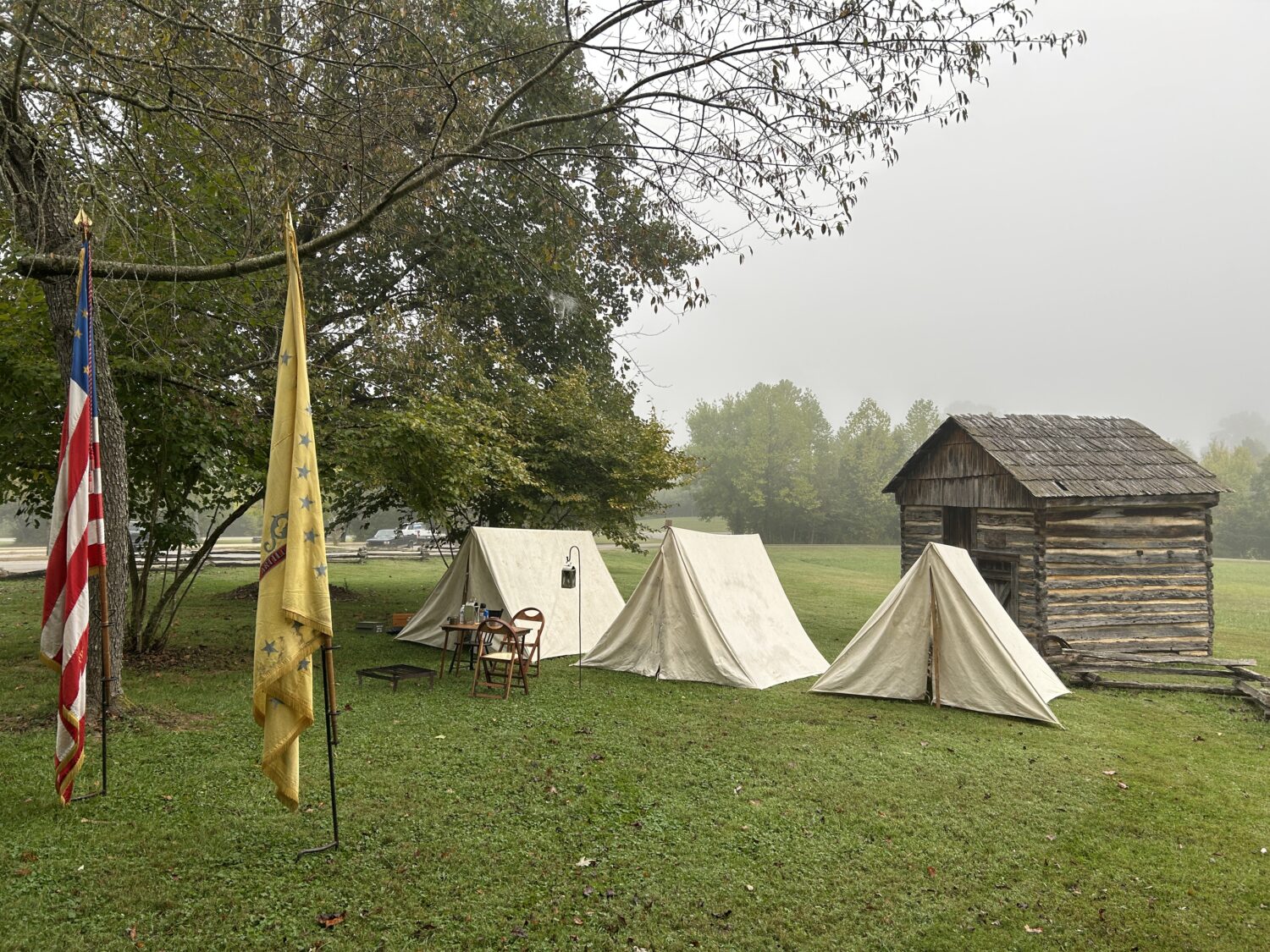
Ranger Layton was in charge of the Battle of Cumberland Gap Commemoration. The main reason for having the event was to showcase the African American soldiers from Camp Nelson National Monument. Four men came to represent the African American troops from Kentucky and Tennessee that had finally been allowed to serve in the Union army during the Civil War. These living historians came on Friday night and set up tents at the park. On Saturday morning they were ready to greet the public and talk about life as an African American soldier during the Civil War.
The Battle of Cumberland Gap Commemoration was an excuse to have them in the park. But it also gave us a chance to talk about the Civil War history of the park. The Gap had initially been occupied by the Confederates under General Zollicoffer. When the Confederates withdrew from the Gap in June, 1862, the Union under General Morgan swiftly moved in. The Union forces withdrew from the Gap in September and the Confederates took it back immediately. Finally, a year later, General Burnside ordered the unconditional surrender of the Confederate forces at the Gap. After a bloodless engagement in September 1863, the Confederate forces surrendered, and General Burnside took the Gap. It remained under Union control for the rest of the Civil War.

In addition to the soldiers from Camp Nelson, we observed the Battle of Cumberland Gap Commemoration with varied living history. I cooked for everyone. I made chicken and rice soup, corn cakes, and apple brown betty. Lucas’s mom, Lorine, tended the corn cakes all morning and did an excellent job with them. They were moist and delicious. Everyone got plenty to eat. Fortunately I made two batches of apple brown betty because they were quickly devoured.
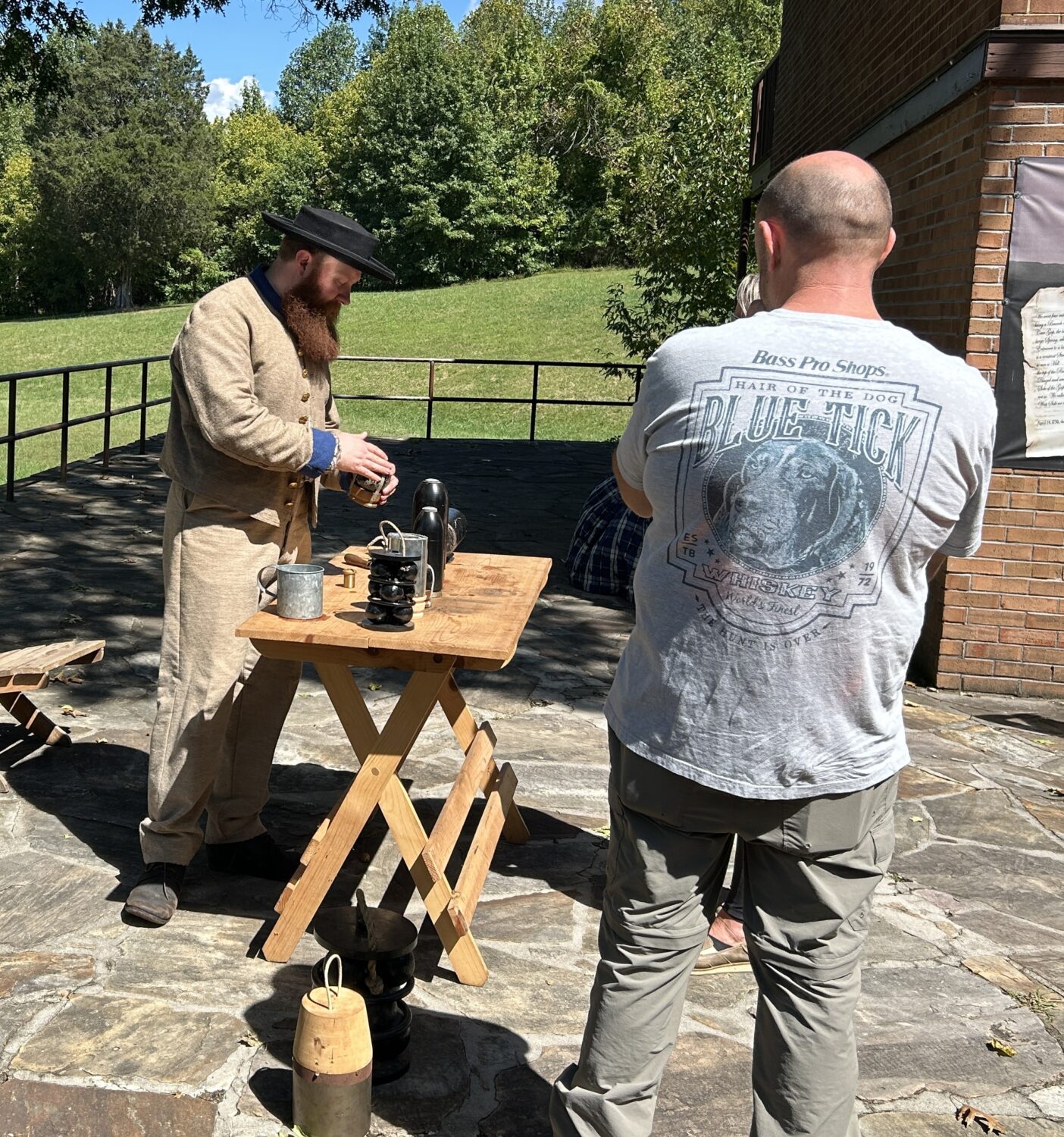
Ranger Lucas spent the day at the cannon talking about the artillery defense of Cumberland Gap. He also share the story of Long Tom, the large cannon that was thrown from the top of the Pinnacle every time a different army took over the Gap. Each new army would haul it back up to the Pinnacle again. An exhaustive effort for everyone.
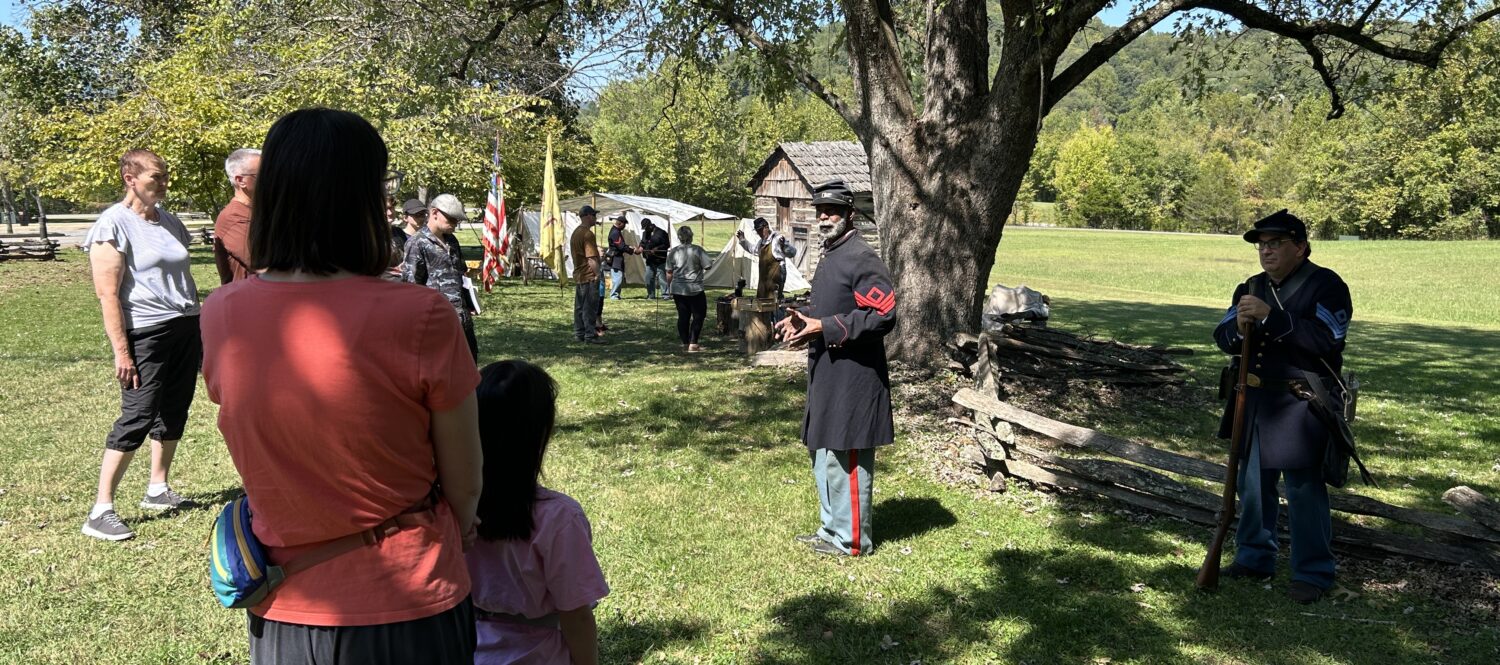
Ranger Layton worked closely with the soldiers from Camp Nelson. They did firing demonstrations throughout the day. I was able to listen to the historical talk that the Camp Nelson leader gave. He talked about Kentucky being the last state in the Union to allow African Americans to be soldiers. He also talked about the dangers of being an enslaved person during the Civil War in a state that didn’t secede from the Union. It was very interesting.
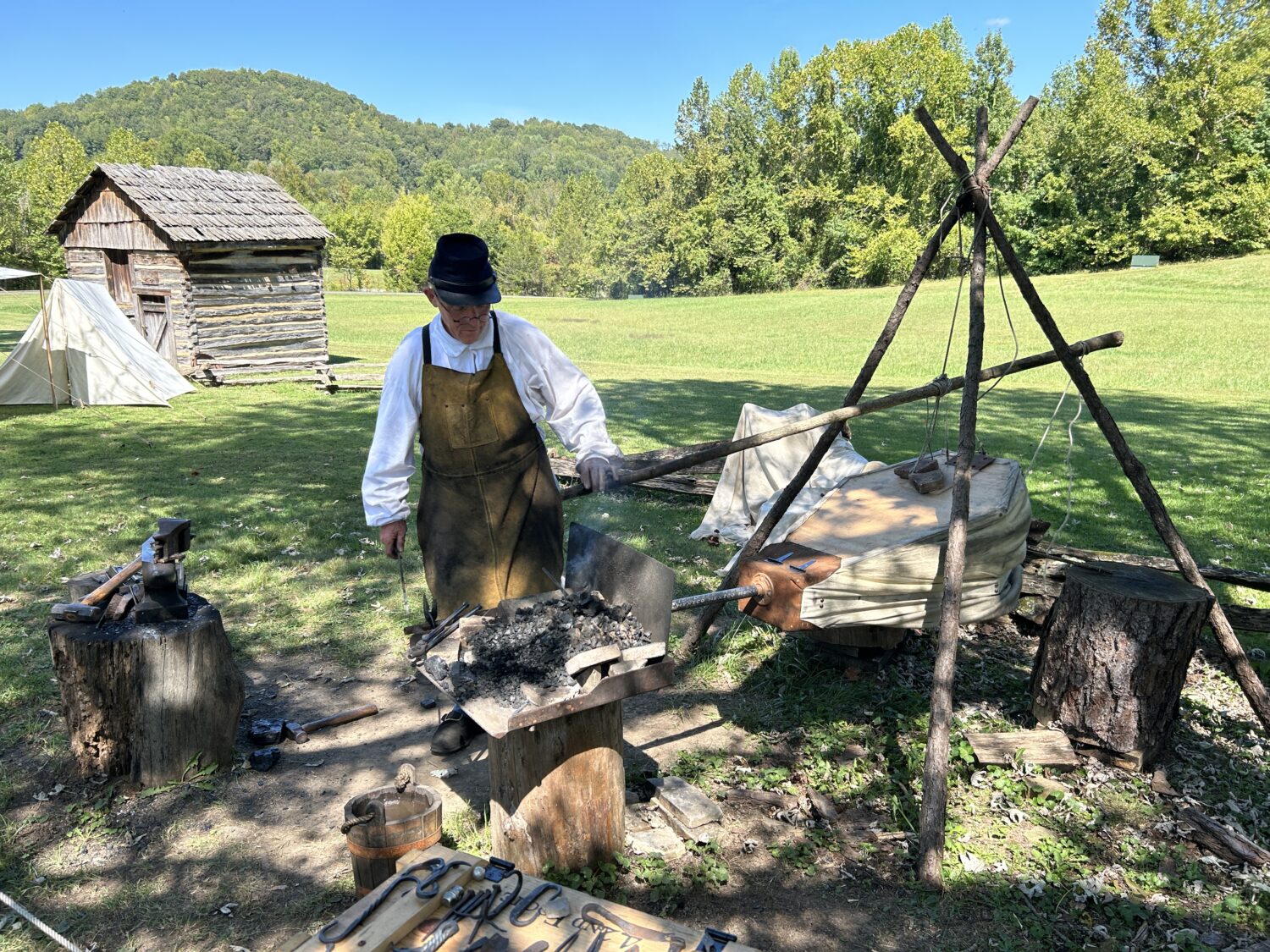
Tom and Ranger Stormy worked as blacksmiths during the day. It was a perfect day for the event. Sunny, but with temperatures in the 70’s and low 80’s. We had about 200 people stop by to talk to us. People love to see history in action and had lots of questions for us. The main question I got was “what time is lunch?” Unfortunately we are not allowed to let visitors eat any of the food I made. I was very thankful to Ranger Brittony who used her muscles to carry my heavy pots back and forth.
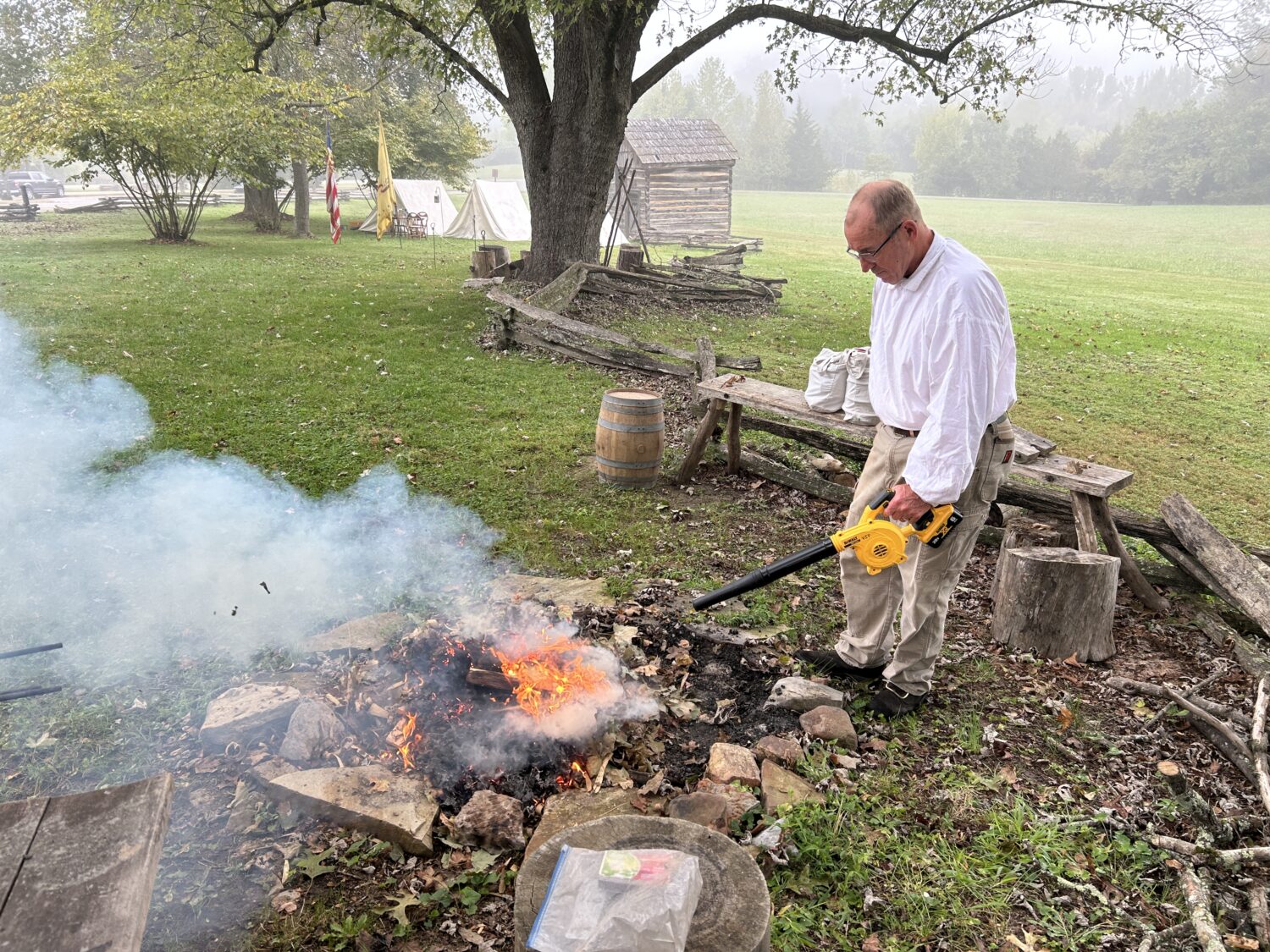
The Battle of Cumberland Gap Commemoration was another successful event for the park. When the day was over, Tom and I put away our living history equipment, washed and then turned in our living history clothes, and packed up until next year. It was a good ending to a wonderful summer.