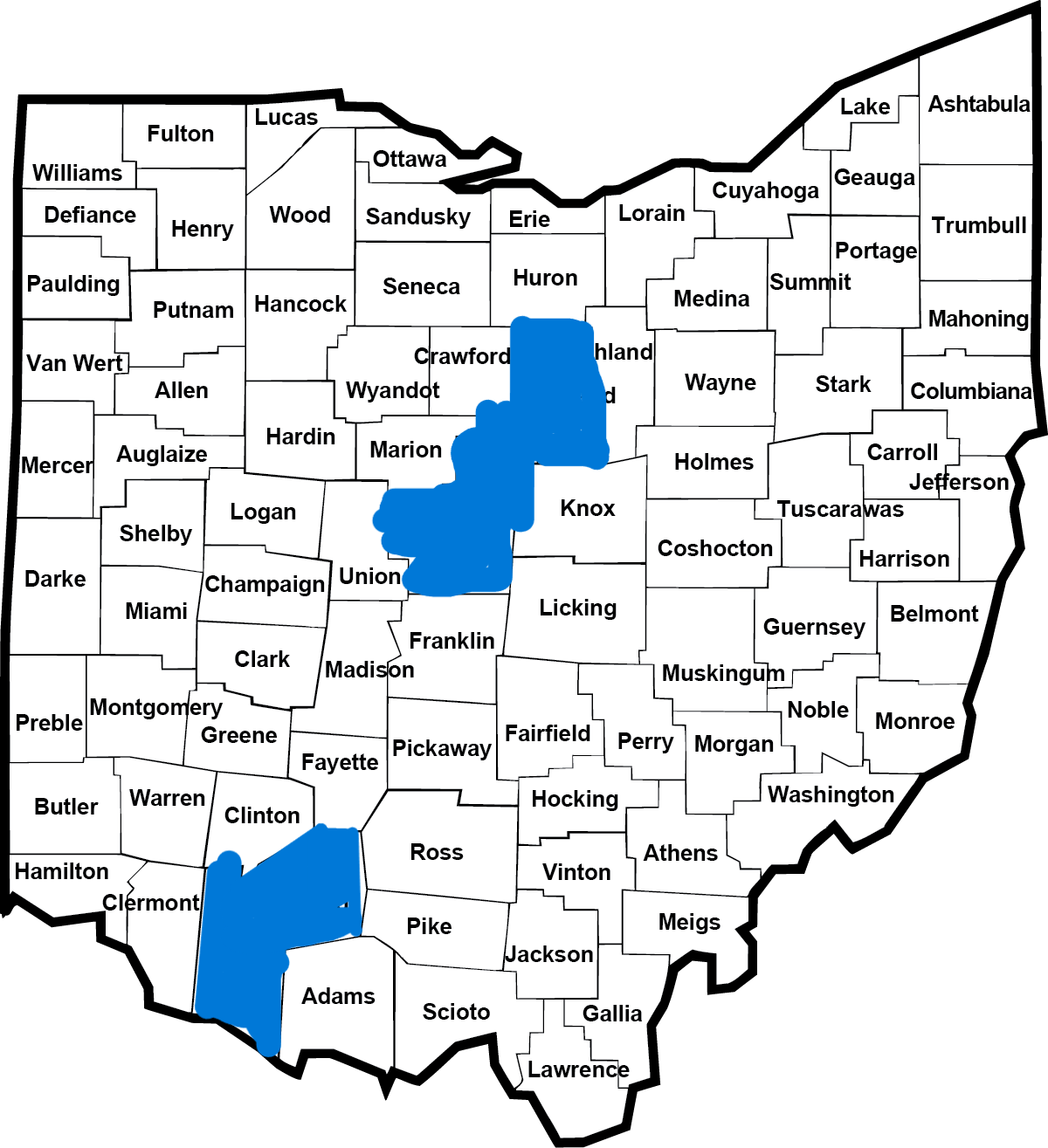
Continuing with our quest to find all the Ohio Historical Markers, Tom and I drove through Highland County on our way to and from Columbus in September. Highland is the county to the northeast of Brown County. Tom and I usually drive through Hillsboro, which is the county seat. Most of the historical markers, however, were located in Greenfield, and we had never been to Greenfield.

“What is so remarkable about Greenfield?” we wondered. Greenfield was founded in 1799 and quickly became the home of abolitionists who moved there specifically to be part of the abolition movement. Many of the historical markers describe this early history. The little town of 4,000 has a rich heritage and they are proud of it.

One historical marker described the Smith Tannery, the oldest remaining structure in Greenfield. The tannery was built in 1821 and served as a stop on the Underground Railroad.

Another historical marker was in front of the McClain High School. This high school was built by textile manufacturer Edward Lee McClain as a gift to his home town. Built in 1915, the school was considered state-of-the-art, with a fully equipped gymnasium, motion-picture equipment, and a pipe organ. The building is still used for education today, although it has been expanded and modernized.

The CR Patterson and Sons company once stood in downtown Greenfield. It was the first car and bus manufacturing companies owned by a black man. CR Patterson had a carriage building business. When his son, Frederick, took over the business, he started building cars and buses. Frederick was the first African American to graduate from Greenfield High School. He broke the color barrier at Ohio State when he played football. He served as OSU Senior class president in 1893. Although the Patterson company passed through three generations of Pattersons, it closed in 1939, a victim of the Great Depression.

Many of the black families in Greenfield, including the Patterson family, escaped slavery and found a new life in this small, Ohio town. Another person who lived as a free man in Greenfield was Augustus West. West escaped from slavery four times! The original time, and then three times as a way to raise money to buy his own farm. He worked with a white abolitionist named Alexander Beatty. The pair would travel into Kentucky and sell West. When West escaped, they would split the money. They sold West three times. With the money, West bought 177 acres and built a “mansion” and cabins for other emancipated slaves. White and black abolitionists lived in a neighborhood called Abolition Lane.
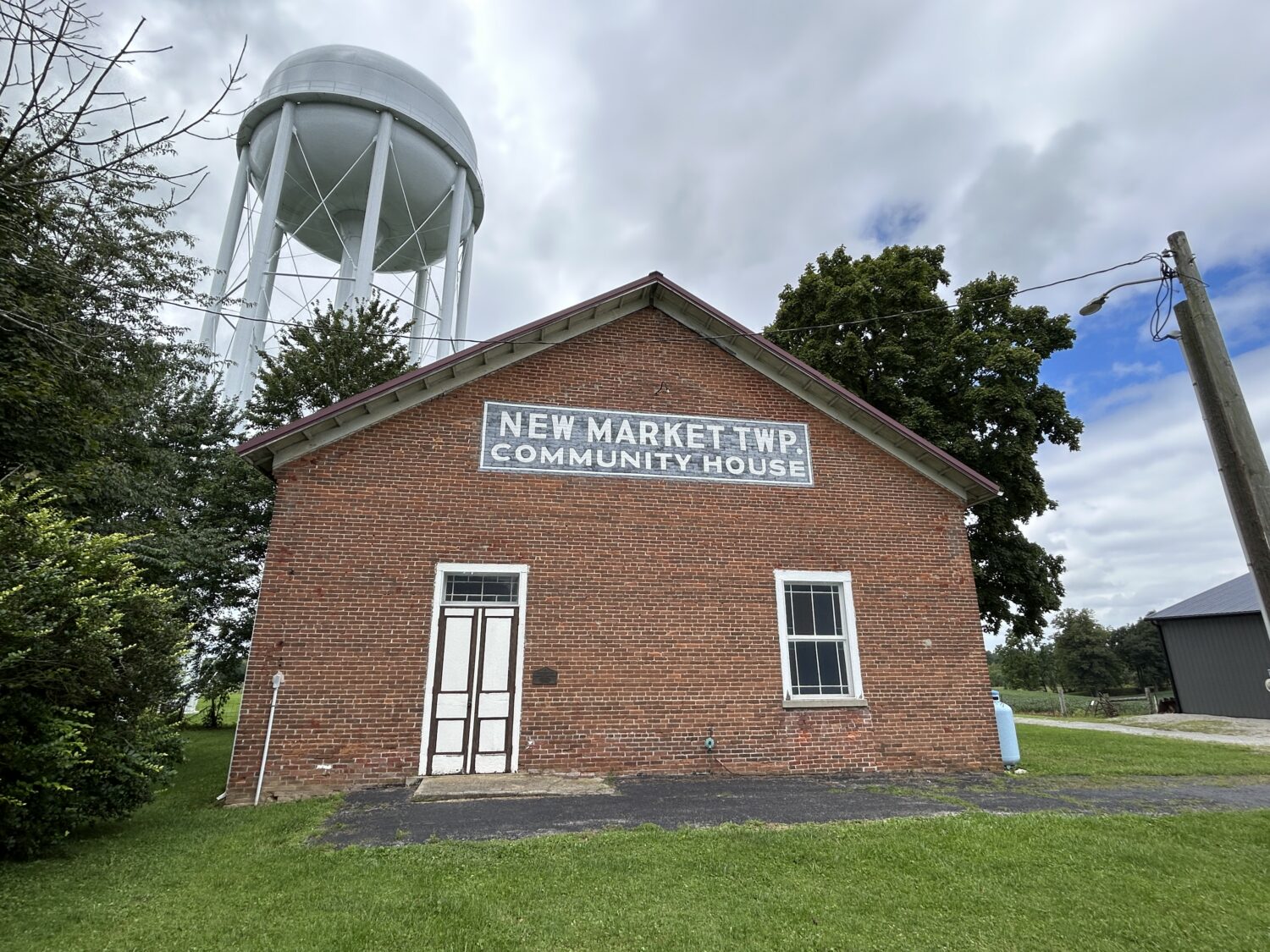
In addition to the four Highland County Historical Markers in Greenfield, Tom and I located two in Hillsboro and two outside Hillsboro. One of them was the Gist Settlement marker, which I already wrote about. Another marker was in New Market, the oldest settlement in Highland County, founded in 1798. New Market was a bustling crossroads, but today is just a small hamlet.
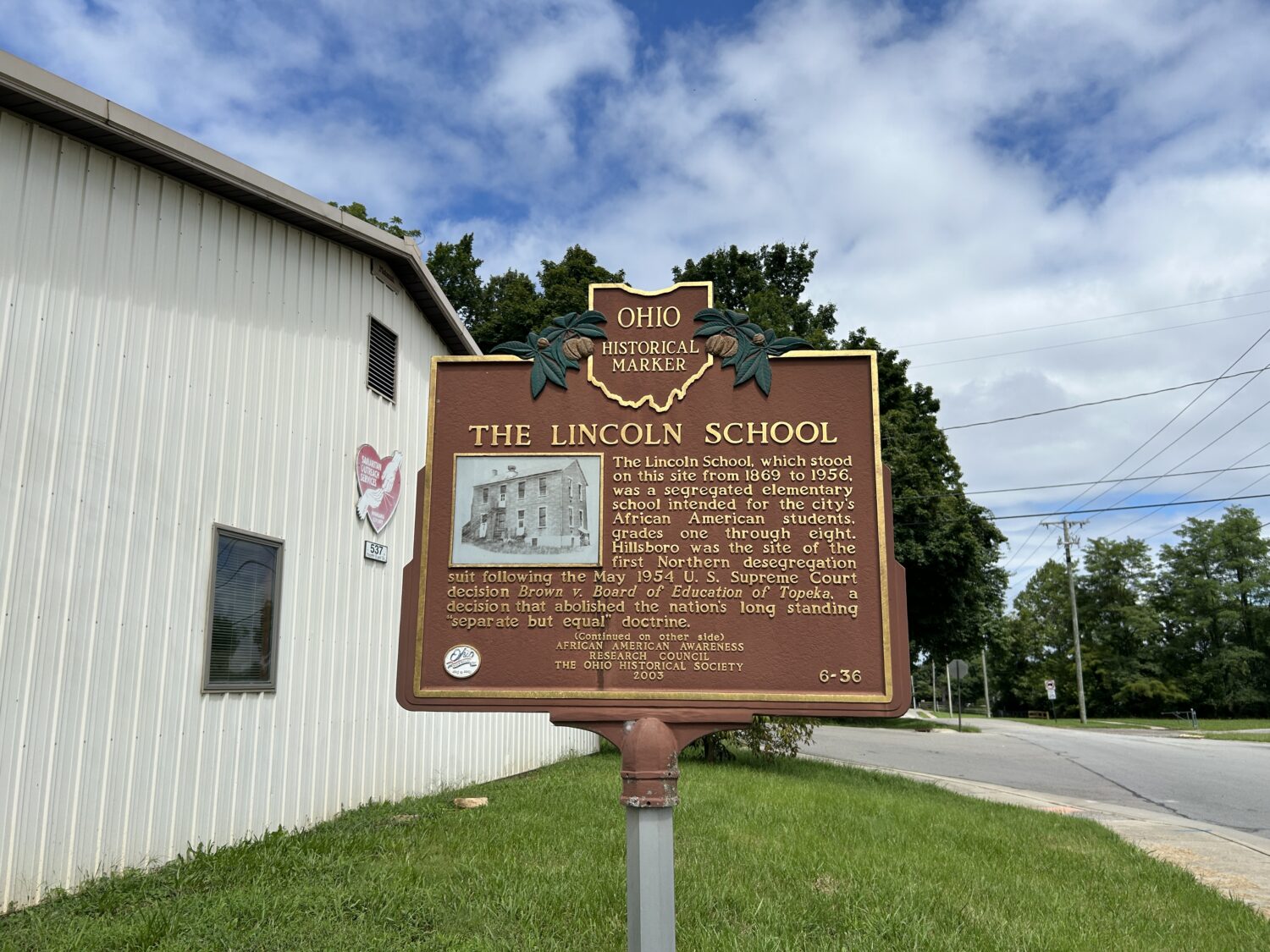
The first marker in Hillsboro was for the Lincoln School, a school for black children which was open from 1869 until 1956. When the Hillsboro schools were finally desegregated in 1956, the school was closed.
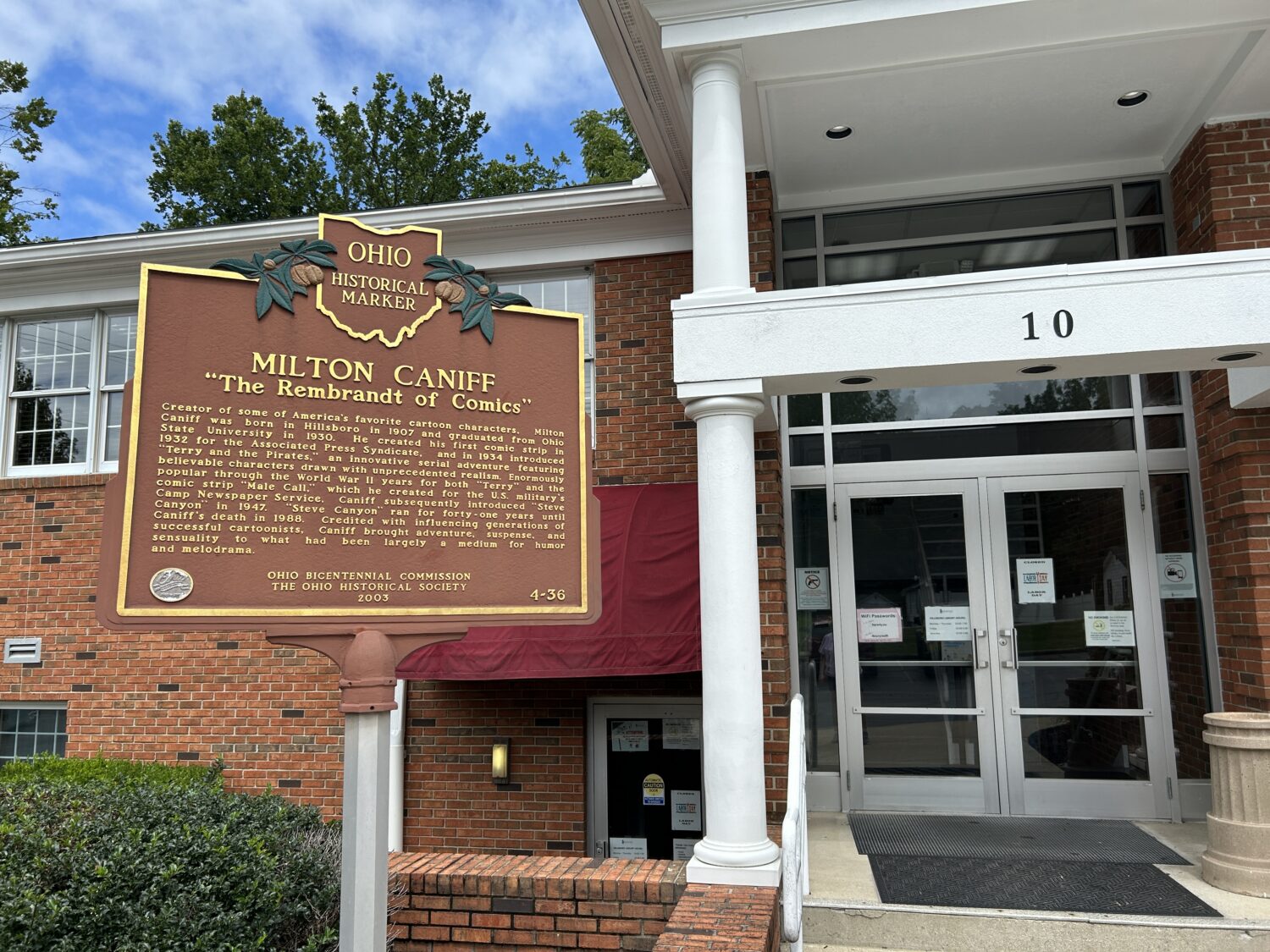
The other marker in Hillsboro was for Milton Caniff. I had never heard of Milton Caniff, but he was born in Hillsboro and became a famous cartoonist. He drew Terry and the Pirates and the Steve Canyon comic strips. Steve Canyon ran in papers for 41 years, until Caniff died.
There were only eight Highland County Historical Markers, which made it easy to bag all of them. Five counties done, 83 to go!