
Tom and I made a quick trip back to Ohio to see Mom. Steve, Julia, and three of Mom’s grandsons have been doing a great job of visiting and helping her with things. We didn’t need to go, but we wanted to see her. While we were with her, we spent a day exploring history in Mansfield.
I grew up in Lexington, Ohio, just a couple of miles from Mansfield. We went to Mansfield for most of our shopping. The mall where teens hung out was in Ontario. If we wanted to eat in a restaurant, we headed to Mansfield. I knew Mansfield pretty well.
But I haven’t lived there for 45 years and it has changed a bit in that time. Most of the manufacturing jobs that helped Mansfield prosper have gone away. The mall is mostly a health care facility these days. The movie “The Shawshank Redemption” made Mansfield an unlikely tourist destination. Mansfield is the county seat of Richland County and, despite some struggles, is still home to 47,000 people.
Since Mom and Dad moved to their condo at Wedgewood Estates in 2019, I have spent more time in Mansfield. When we went back in July, we invited Mom to help us find the Richland County Historical Markers in Mansfield. I posted before about our scavenger hunts for these historical markers, and you will probably read more about them in the future. I find hunting for these historical markers to be a fun way of exploring history. Mom was up for the challenge, having spent time with us before looking for the historical markers.
We started in downtown Mansfield on the Square. Although the Square has gone through many changes over the years, the tree-shaded lawn between four main roads remains the same. Shops, restaurants, and government buildings line the streets, changing names and owners periodically. The Square is full of memorials, statues, and contained three historical markers.
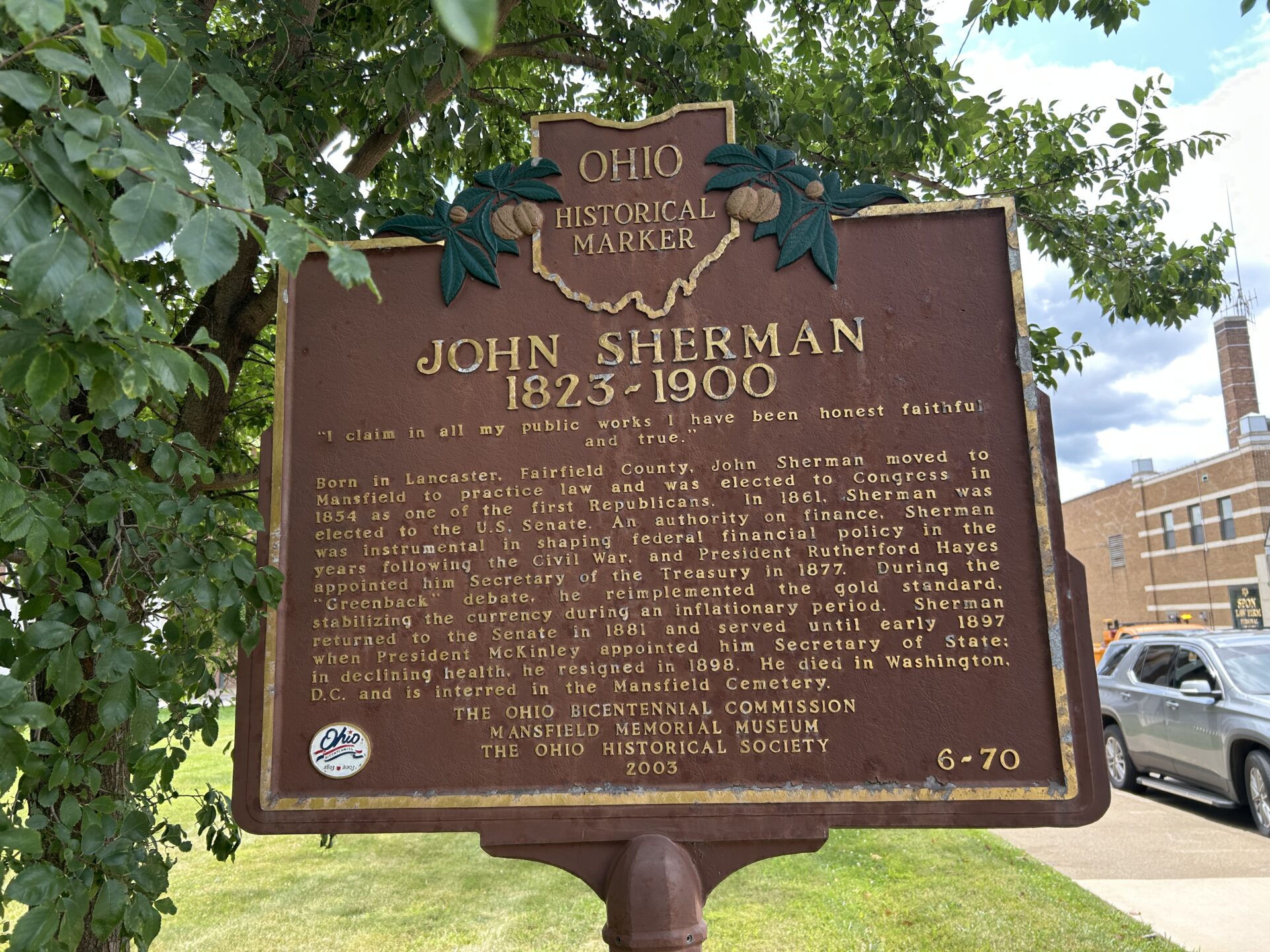
The first marker we found was about John Sherman, who served as a Congressman and Senator from Ohio in the 1860’s. He was named Secretary of the Treasury by President Rutherford B. Hayes in 1877. Sherman returned to the Senate, and then was named Secretary of State by President William McKinley. He is buried in the Mansfield Cemetery. He introduced the bill that would become the Sherman Anti-Trust Act in 1890.
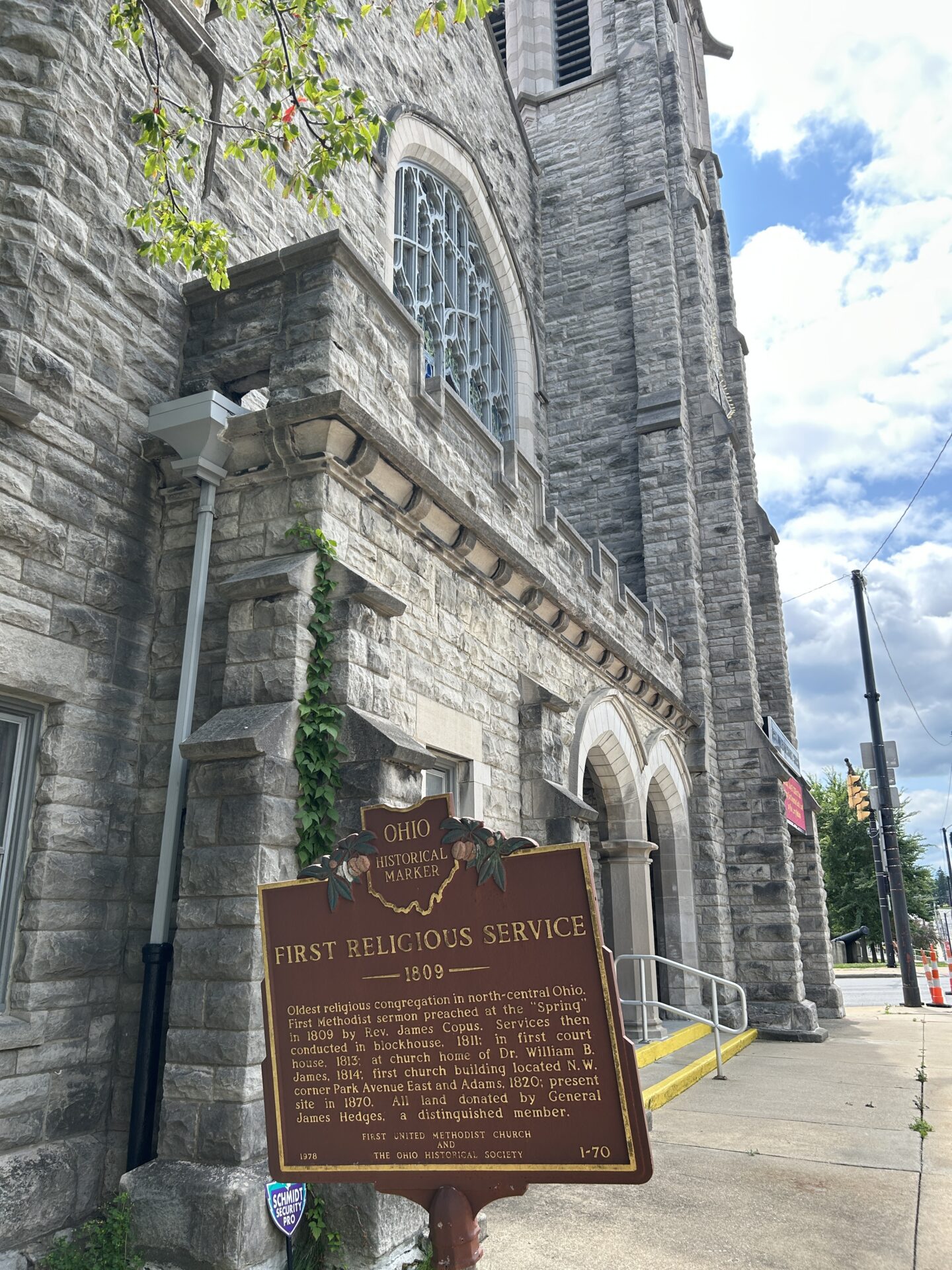
The second historical marker told the story of the first religious service in north-central Ohio. The service was held on the Square (at the blockhouse) in 1809. From these humble beginnings grew First United Methodist, which has had a presence on the Square ever since. The current, imposing granite building was erected in 1870.
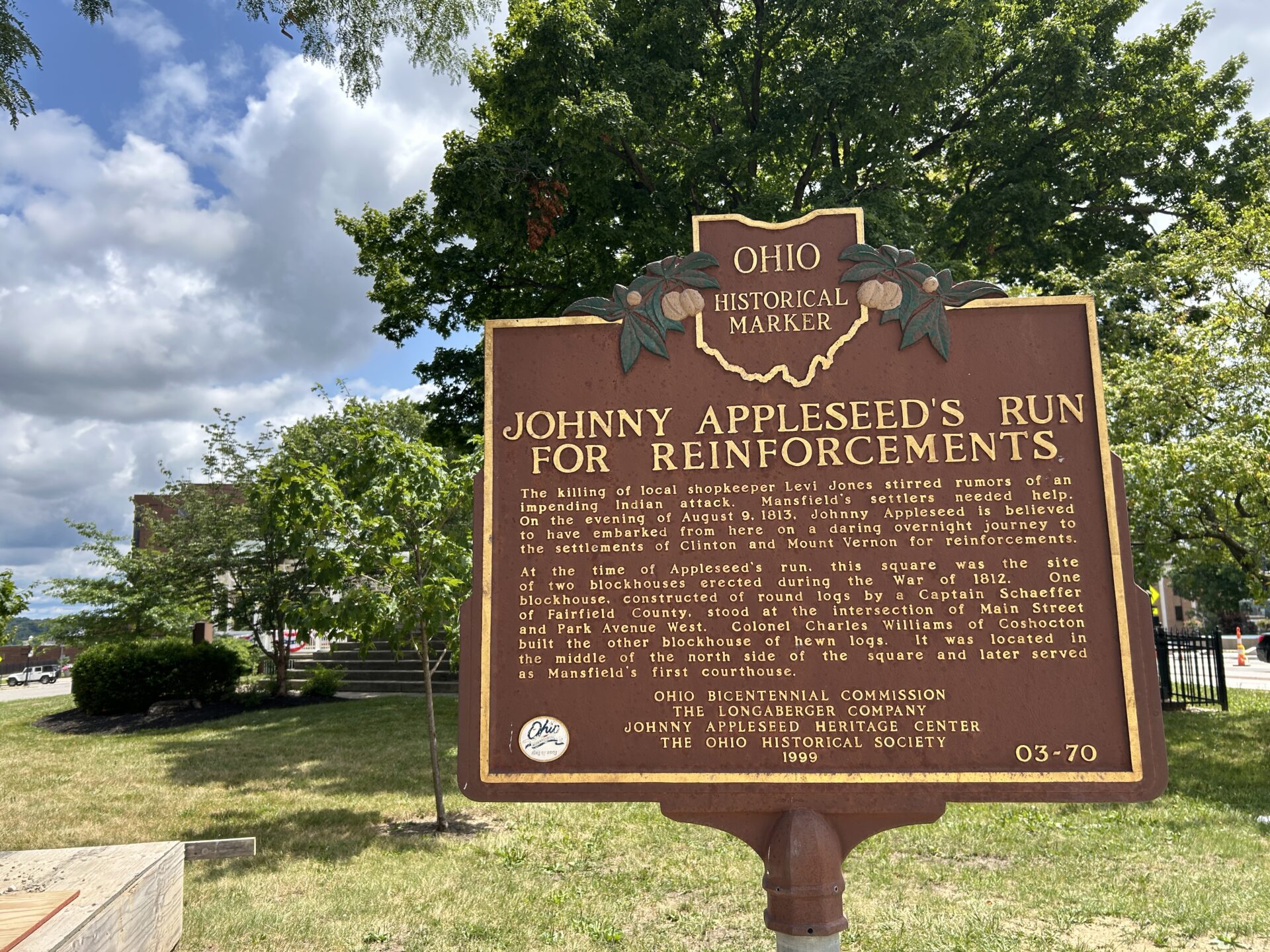
The final historical marker on the Square told about John Chapman’s (Johnny Appleseed) run for reinforcements in 1813. Concerned about a rumored Indian attack, Chapman ran during the night to Mt. Vernon, the closest settlement at the time. The settlers huddled in the two blockhouses on the Square until the reinforcements arrived the next day. The Indian attack never materialized.
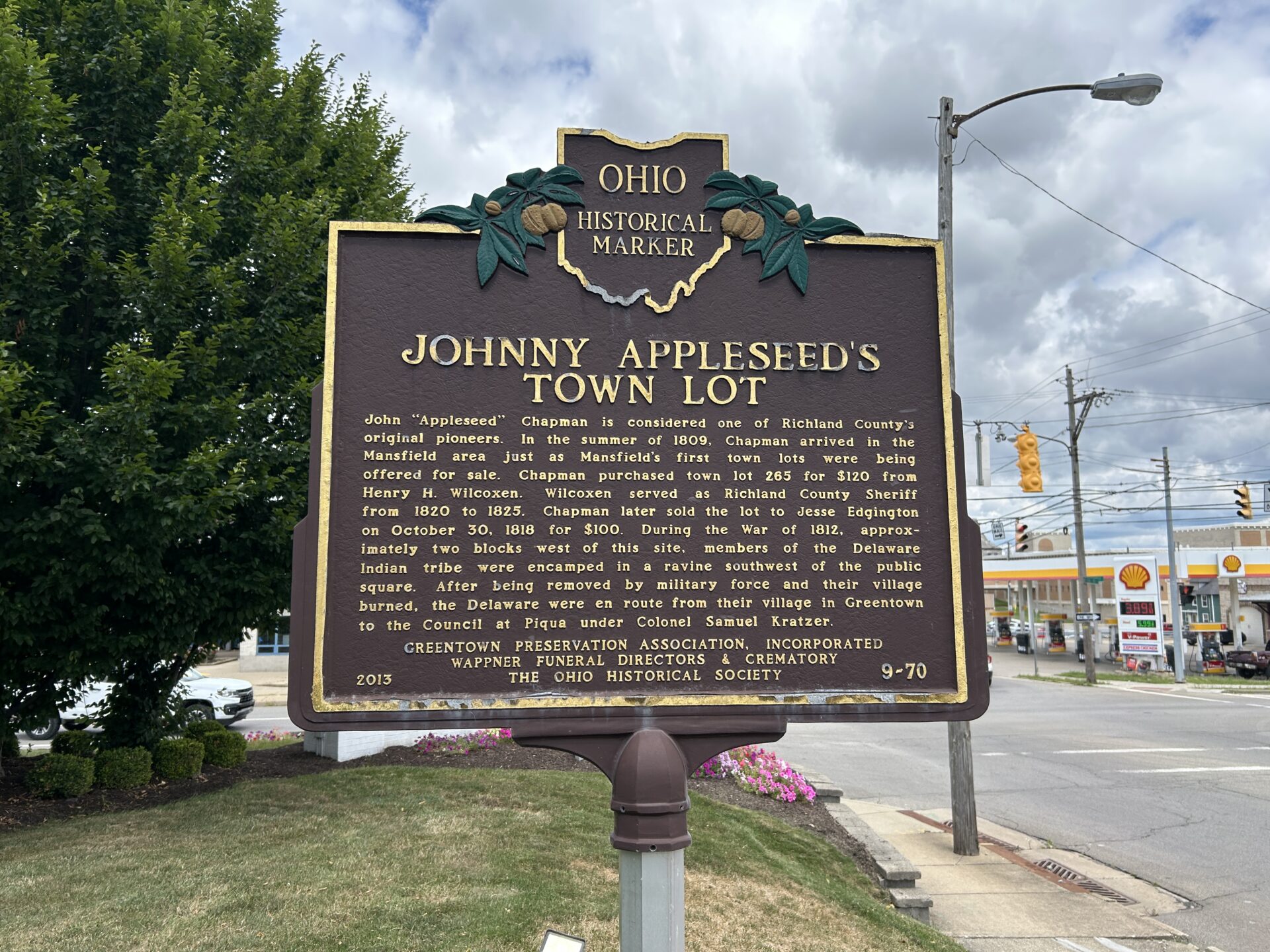
A block away, we found the historical marker for John Chapman’s town lot. Chapman was one of Mansfield’s original settlers and bought his lot in 1809. He sold the lot in 1818 and never built a house on it. Although he lived in the Richland County area for twenty years, this was his only land ownership.
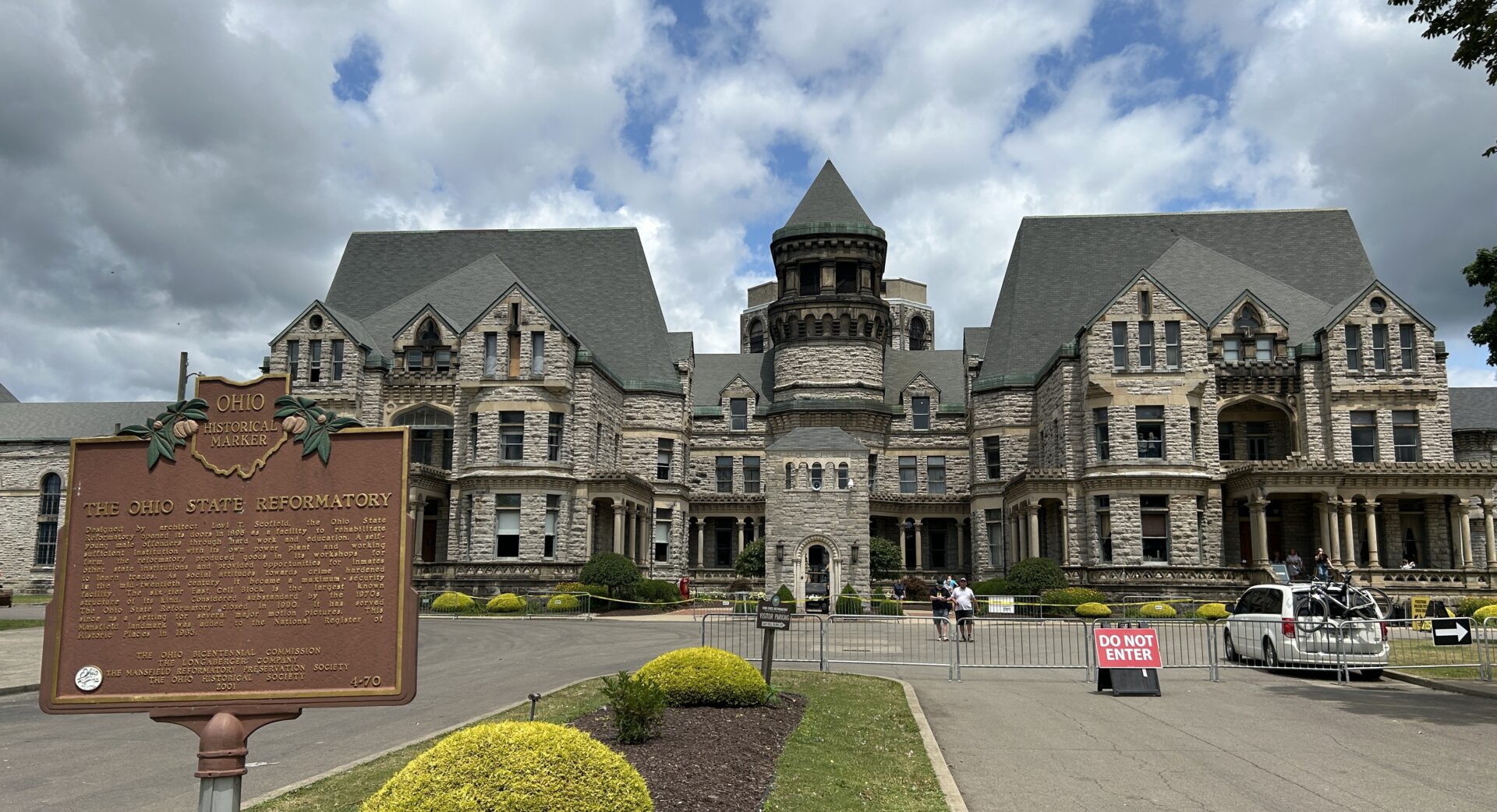
After finding the downtown markers, we headed north a few miles to the entrance of the Ohio State Reformatory of Shawshank fame. The Reformatory was opened in 1896 as a place to teach young men useful trades and encourage them to leave a life of crime behind. By the 1950’s, the Reformatory had become a maximum security facility. The prison closed in 1990 when a more up-to-date facilty was constructed nearby. Today the imposing building is a popular tourist attraction and crowded haunted house in the fall.
We drove south of downtown to the old Masonic Lodge where we expected to find the next historical marker. General James Hedges was a surveyor and one of the three founders of Mansfield in 1808. He purchased 19,000 acres in the area and gave land for the Methodist Church, a school and a park. Hedges served in the War of 1812 and founded the Mansfield Masonic Lodge in 1818. We were not successful in finding the marker. We found out later that the marker was removed when the Masonic Lodge closed and has not found a new home yet.
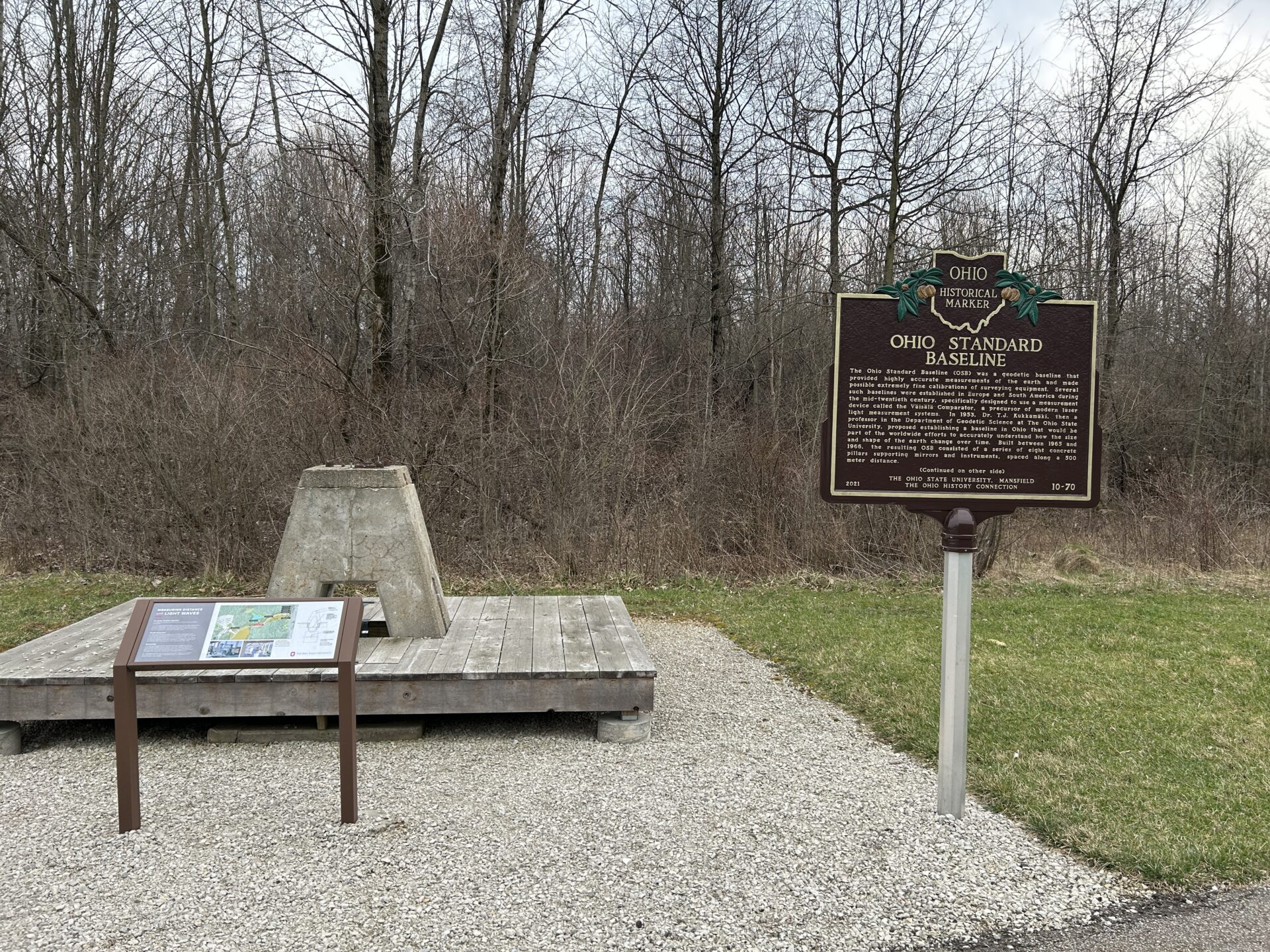
Our final historical marker in Mansfield was on the campus of the Mansfield Branch of Ohio State. This was a marker we found last year when we were just driving around with Mom and Dad. The marker tells about the Ohio Standard Baseline, a geodetic baseline that was supposed to revolutionize surveying. It was never used.
Having found all these historical markers, we were done exploring history for the day. We still have a couple more historical markers to find in Richland County, but they were farther away. Those will be a search for another day.
If you want to do your own county scavenger hunt, you can find all the Ohio historical markers listed at Remarkable Ohio. Not only does the website give you a good description of the markers, it also give very good directions on how to find them. Exploring history in this way is fun!