
On a recent, gorgeous afternoon, Tom and I headed outside to the sidewalk in front of the Cumberland Gap Historical Park Visitors Center with the intention of making rope from tow. All summer long, I have been processing flax to weave linen. Tow is the fibers that are too short or rough for linen cloth.
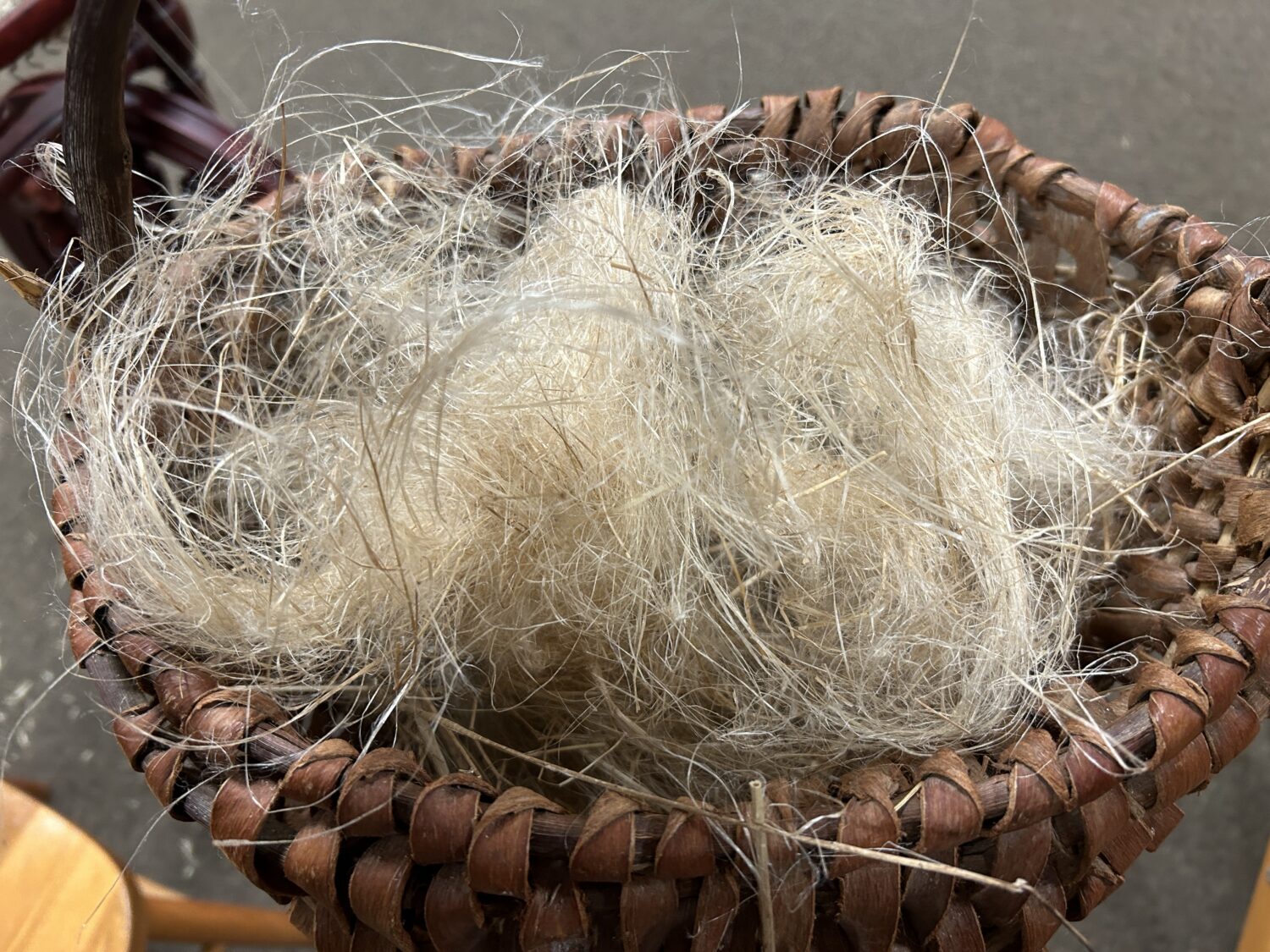
The tow is extracted from the line fiber during hackling, sometimes called heckling. After breaking the bark and scrutching it to remove what has been broken, I pull the fiber through hackles. The hackles are like brushes, only made out of nails. The fiber is pulled through a series of hackles, working from coarser to finer. Only the finest fibers get made into linen cloth. The other fibers are all tow and used to produce either coarse cloth or rope.
I have been thinking about making rope for a while. Throwing away the tow felt very wasteful, when the pioneers would have used every bit of an item. This year I decided to save the tow so we could make rope at the end of our season. The tow filled a garbage bag and I started spinning it into twine last week.

I only needed three bobbins of twine and thought I would be able to create that in one day. There were several problems with that. First, the tow was a lot harder to spin than I had anticipated. Because of the thickness of the twine (as opposed to the yarn I usually spin), the twine did not wind on the spinning wheel bobbin. Instead, I would spin a yard of the material, then wind it onto the bobbin by hand.
Second, I had to separate the tow that still had a lot of bark from the tow that was a finer fiber. In my head I called it the first brushing, when the parts with lots of bark still on them come out, and second brushing which is coarser fiber. I should have thrown away the first brushing and just kept the second (and third, fourth, etc) brushing. Instead, I had to separate it out as I went.
Third, October is an extremely busy month at Cumberland Gap National Historical Park. The weather is generally nice and people visit in hopes of seeing the leaves change. Spinning three bobbins of twine takes a lot longer when you spend the whole day talking to folks. I was glad to talk to them – that’s my job – but I had to take advantage of the beginning and end of the days when there weren’t as many people around.
It took me three days to spin the three bobbins of twine. I was pretty pleased with them in general. The twine is very coarse and rough, but I expected that. I’m making rope – not cloth. So they generally needed strength more than beauty.
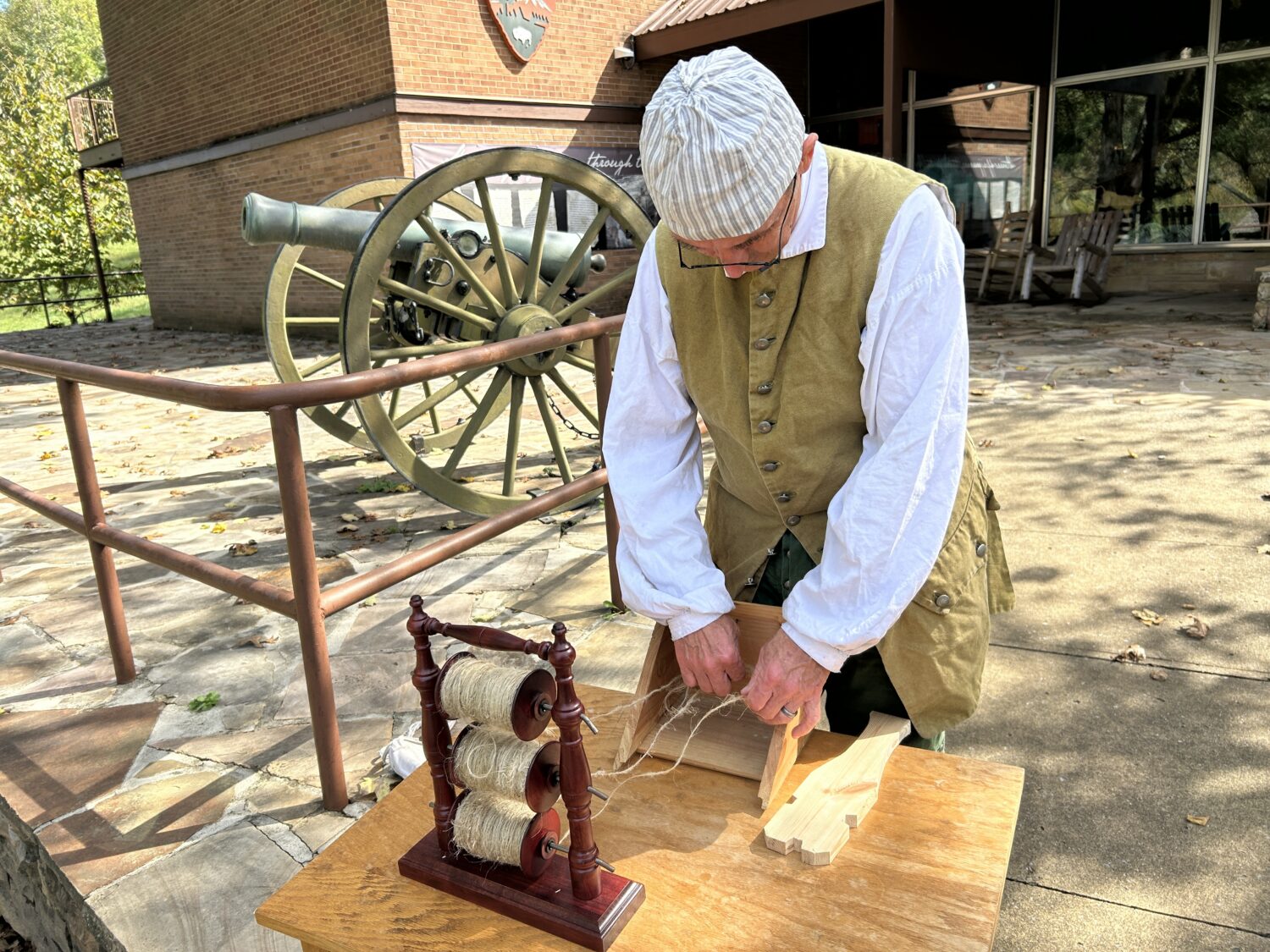
On Monday afternoon, Tom and I gathered all our materials for making rope and headed outside. We needed to stretch out the twine along the sidewalk so it wouldn’t get twisted or pick up lots of debris. Once we got everything laid out, we realized that we needed some helpers. Just then a family with three kids came by and we immediately asked if they would be willing to help. Fortunately they said yes, so we had five additional people with our rope making enterprise.
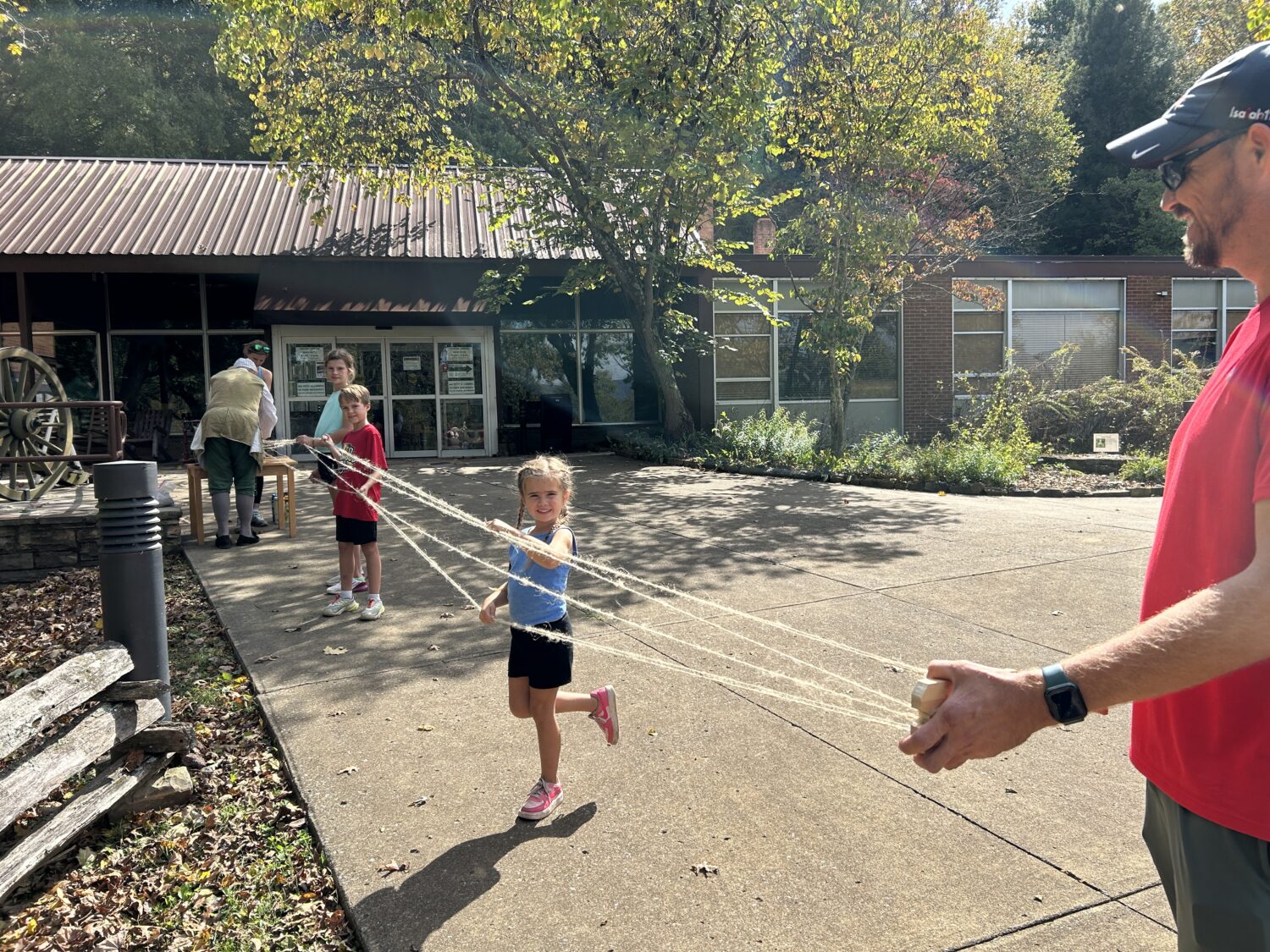
The three kids held up the twine and kept it from getting tangled, while Mom and Dad started turning the rope crank. Tom worked the rope wrench and I filled in and gave people breaks. All the kids took a turn on the rope crank but Dad was the real star. He stuck with it until we got the rope put together, the six strands turning into one, strong rope.

The first rope went so well that Tom and I decided to do it again. It turns out I had spun enough twine for three ropes. This time a Navy veteran and retired airline pilot named Michael helped us. Michael had stopped to talk to me in the morning while I was spinning the last bobbin of twine. As we talked about what I was doing, I mentioned we would be making rope in the afternoon. He came back to watch it being done and ended up helping with the process.
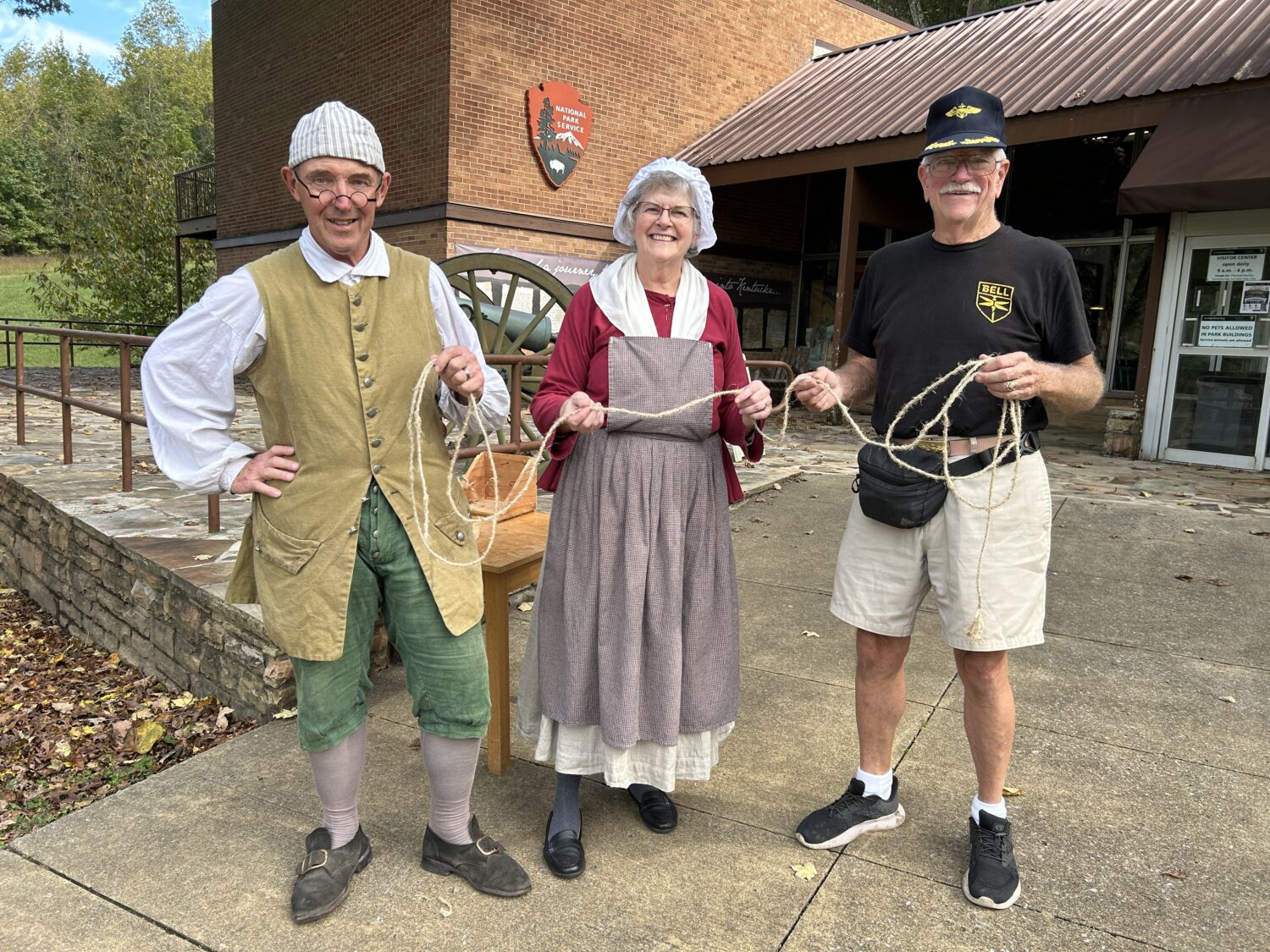
The second rope ended up being even better than the first. Each rope took about a half hour to make with all the set-up and turning the crank. But they looked pretty good considering they were made from a “waste” material. I could totally see making my own rope as a pioneer.
Trying something new is always fun, especially when it works out. I learned a lot from making rope and will definitely do it again if I have the opportunity. Tom is already talking about improving his rope making machine.