
Last Friday Tom and I visited the Ohio History Center in Columbus. After our trip to Campus Martius, we realized that we would save money visiting the sites in the Ohio History Connection if we bought a membership. We took advantage of the 20% off on the website and bought a duo membership for just $45. A few days after joining, we got our digital cards. We should have bought the membership before we went to Campus Martius and saved $20. The membership will get us into the rest of the museums that are part of the Ohio History Connection free.
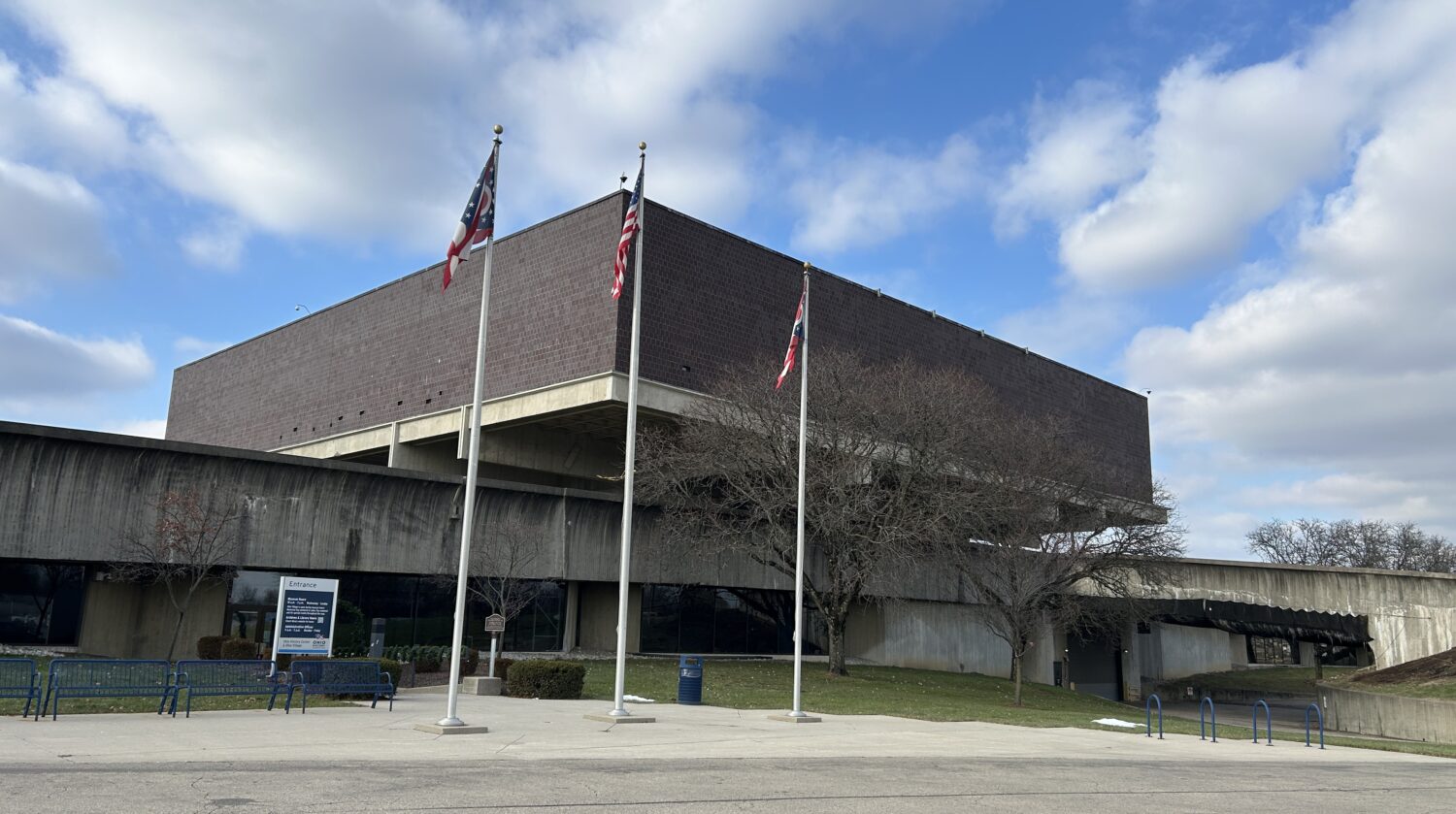
We pass the Ohio History Center all the time traveling up and down I-71. The last time I remember being there was when I was in elementary school. So I didn’t really remember it at all. Several busses of school kids were loading up just as we walked in, so we had the museum practically all to ourselves.
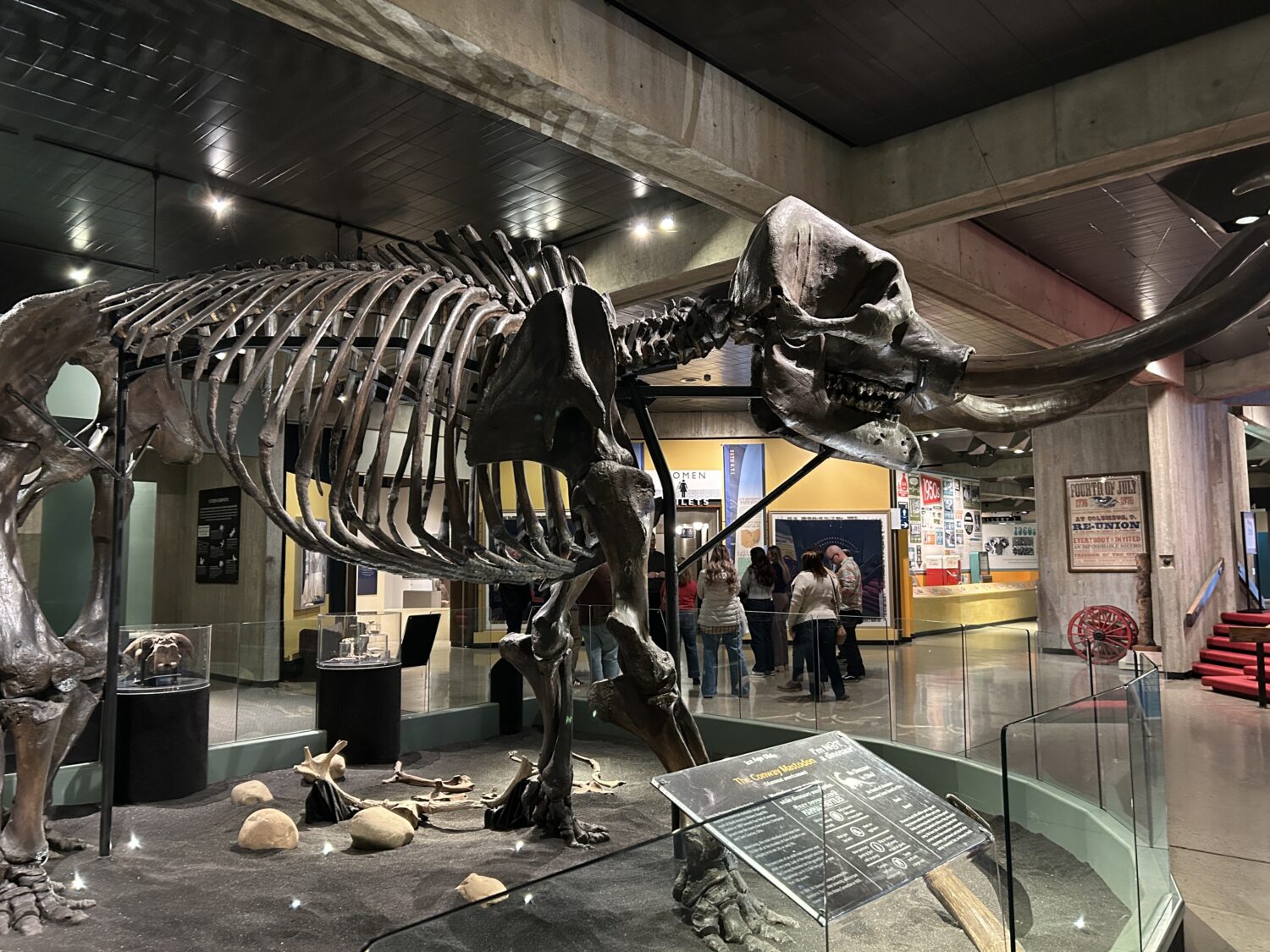
After checking in at the front desk, we started in “The Nature of Ohio.” We saw the Conway mastodon skeleton discovered in Clark County in 1875. The natural section had a very interesting display of threatened, endangered, and disappeared animals from Ohio. Some animals disappeared but have been reintroduced and are thriving. The white-tailed deer disappeared from Ohio around 1900, but we know they are ubiquitous now.

One of the most interesting displays in the museum was “Follow the Flag.” It was a collection of Civil War regimental flags that were carried by Ohio units. The exhibit was very well done with a map showing where in Ohio the members of different units were from and another map showing where they served during the Civil War. The regimental flags were displayed next to the maps.
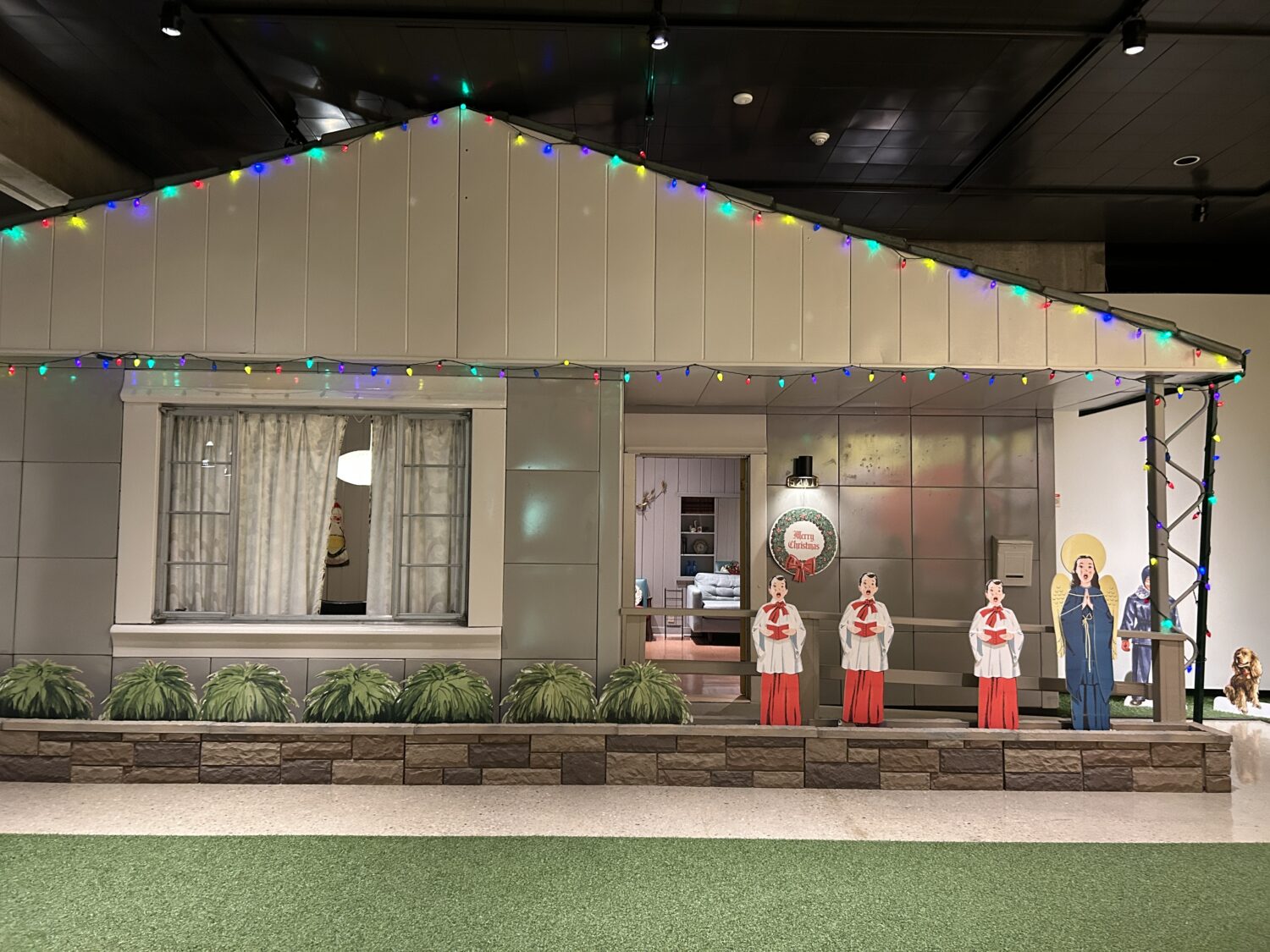
The Lustron house was a fascinating display. The Lustron company built prefabricated enameled steel homes with built-in appliances from 1948 to 1950. There is a complete two-bedroom home inside the Ohio History Center. The Lustron Corporation’s plant was in Columbus and they built about 2,500 homes before shuttering in 1950. 1,500 of these homes are still standing today, although most have been extensively renovated. Over 100 of them are in Ohio (you can see the list here).

We looked at the exhibit on the Hopewell Earthworks, saw fossils, and Walked through “Ohio Through Time.” One thing that caught my eye was the first “pocket” camera from Kodak, circa 1888. It was a small camera with a film roll of 100 exposures. Once you had “snapped” all the pictures (by pulling a string), you sent the entire thing back to Kodak. They would develop the pictures and return them to you with the camera and a new roll of film loaded in it. This camera was the origin of “snapshots” and made photography available to average people.

I saw lots of other fascinating things including cars, airplanes, and a penny-farthing bicycle. One of my favorite things was the opening sign, which states “I am an Ohioan. These stories are your stories.” I am an Ohioan. As a song I like to sing states, “I’m Ohio born and I’m Ohio bred. And when I die I’ll be Ohio dead.” Johnny Cash recorded a song with similar lyrics about being Cajun in 1978, but I was singing this Ohio version long before 1978. His lyrics might be similar, but the tune is different.

The Ohio History Center is open Wednesday – Sunday from 10 to 5. There are also archives and a library available for research Wednesday – Friday. Admission is $16 for adults and memberships start at $50.