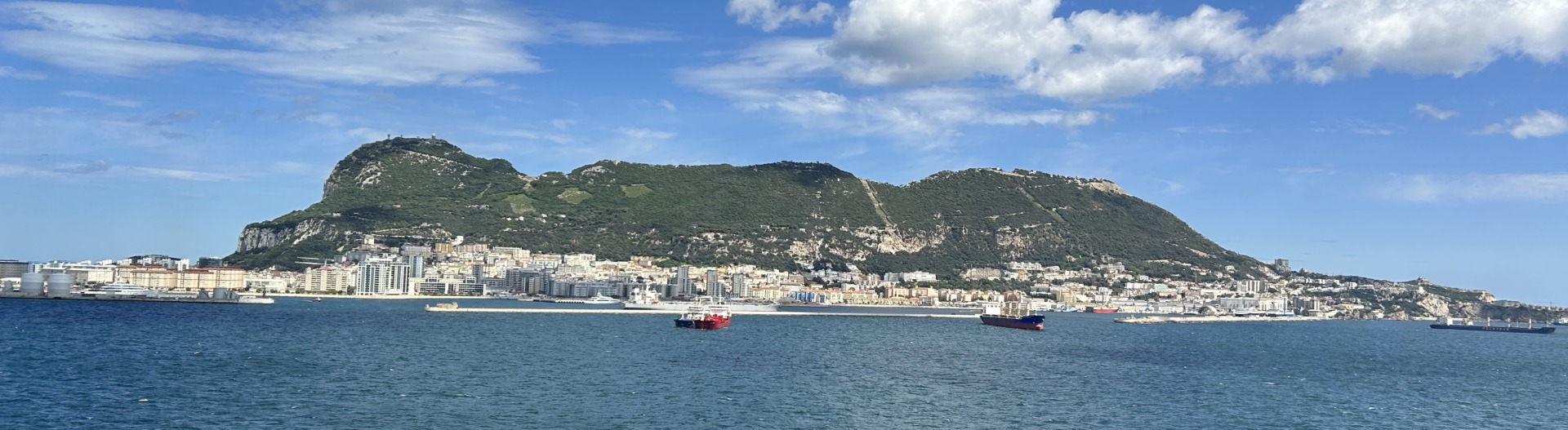
Historic Circleville is one of those places Tom and I have driven by several times without stopping. Last summer, when we were working in Kentucky, we passed by Circleville twice a month. Fortunately, visiting Wittich’s Candy Shop gave us an excuse to stop and explore.
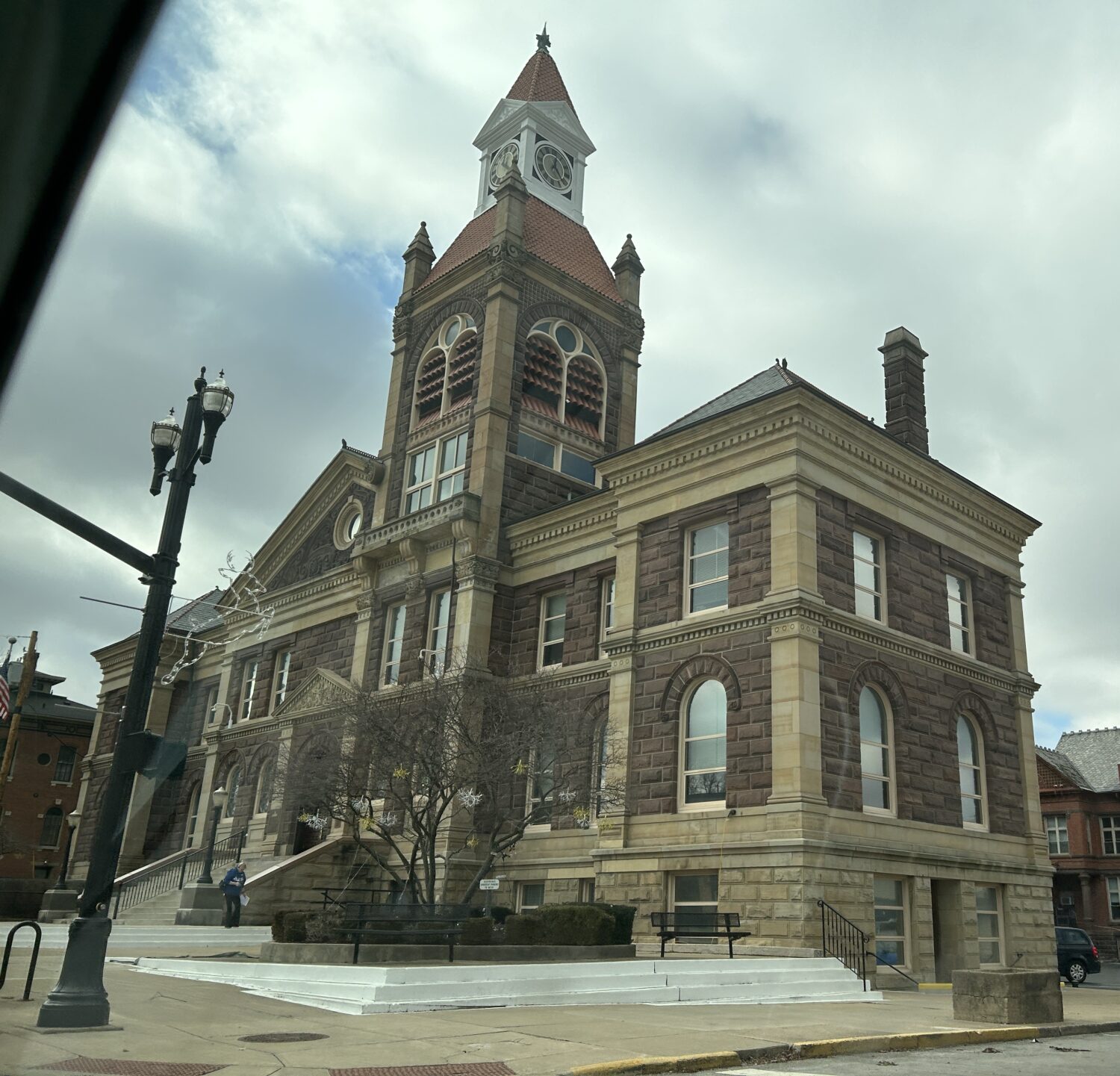
Historic Circleville is a small city of 14,000 residents about 25 miles south of Columbus. It is the county seat of Pickaway County. Circleville gets its name from the large, circular mound that determined the original layout of the city. Instead of preserving the mound, the settlers in Circleville excavated the mound and used it as the original town border. The courthouse is located in the center of the circle. Today the city is laid out in a grid pattern and doesn’t retain any of the circular nature of the mound.

Tom and I found the historic marker that describes the “squaring of Circleville” in the 1840’s. It required considerable effort and replatting to go from a town based on a circle to a town based on grids. This reconstruction destroyed anything that was left of the original circular mound. The only map of the town before the squaring was drawn by GF Wittich, the candymaker, in 1836.
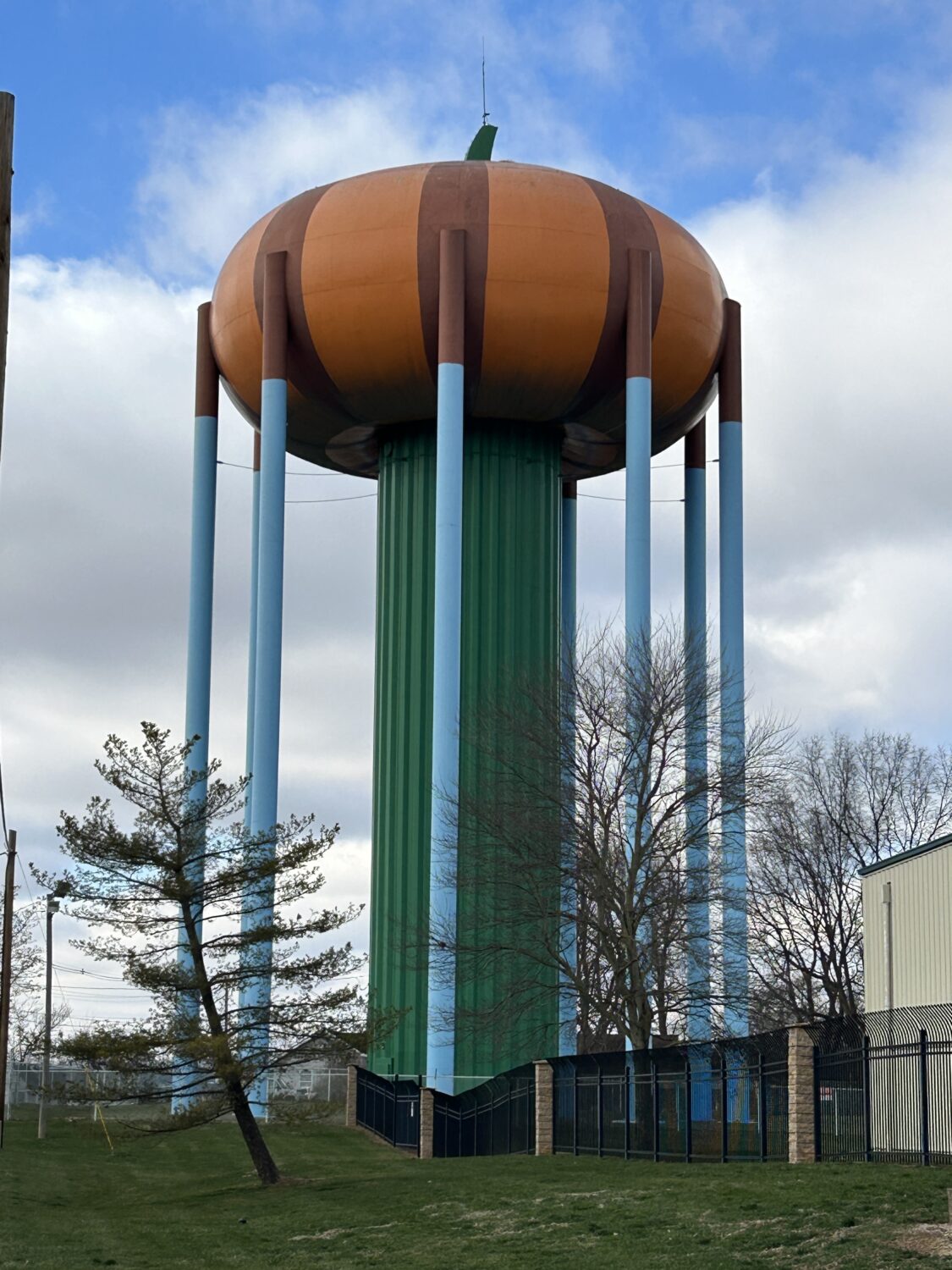
Circleville hosts the annual Circleville Pumpkin Show every year in October. It is the biggest pumpkin festival in the United States. The Pumpkin show started in 1903 and features events such as a pumpkin pie eating contest and the largest pumpkin contest. The dates for 2026 are October 21-24. In addition to the festival, the town also has the world’s largest pumpkin water tower. First painted like a pumpkin in 1997, the water tower is a landmark you can see from all over the city.
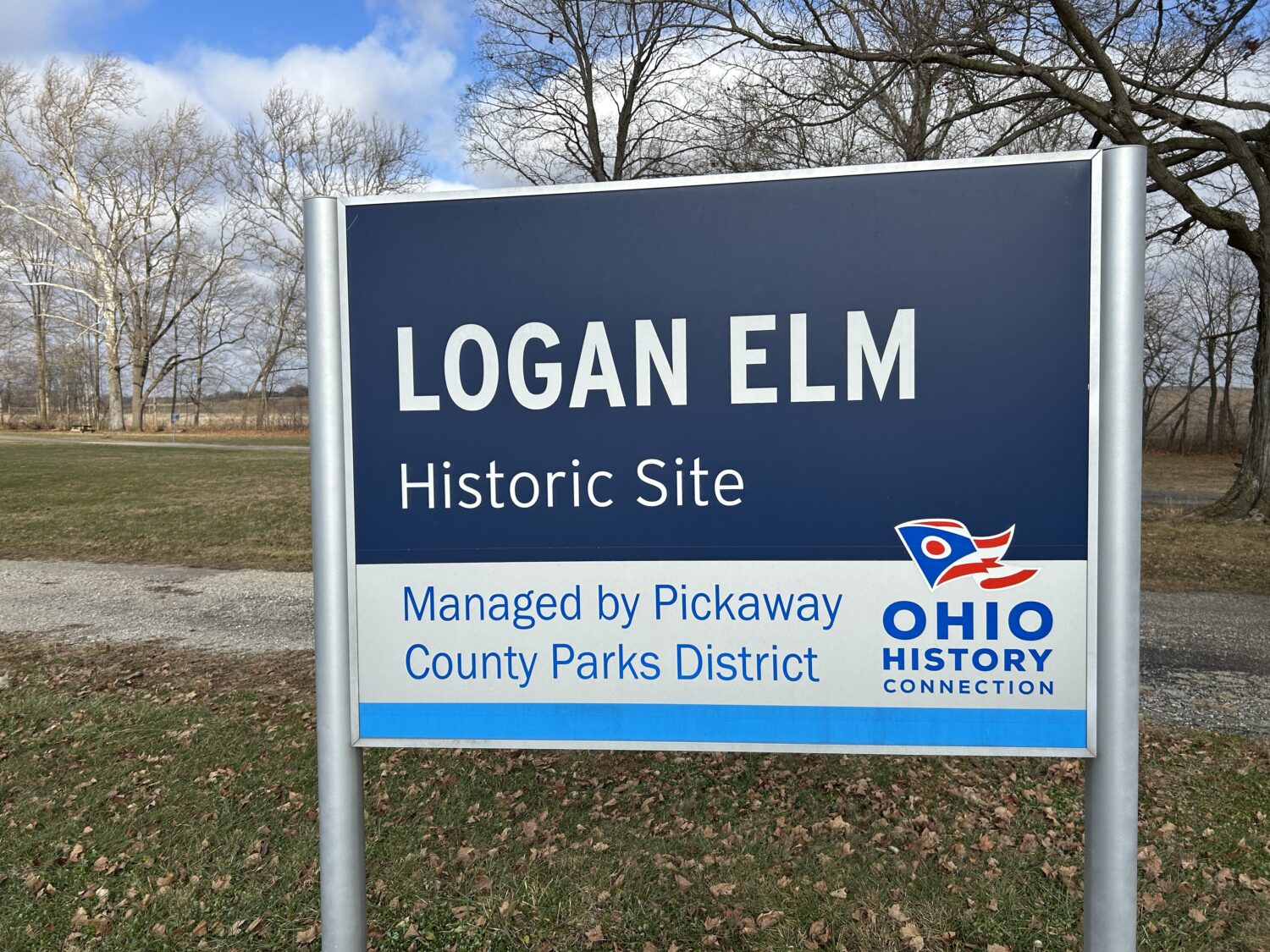
After checking out historic Circleville, Tom and I headed to some outlying historic areas. We went to the Logan Elm first, which is one of the Ohio History Connection sites (in my little passport book). Logan Elm State Memorial Park was established in 1912 to honor Chief Logan and the place where he made his poignant speech. “Who is there to mourn for Logan? Not one.” Although the Logan elm died in 1964, a new elm was planted in its place.

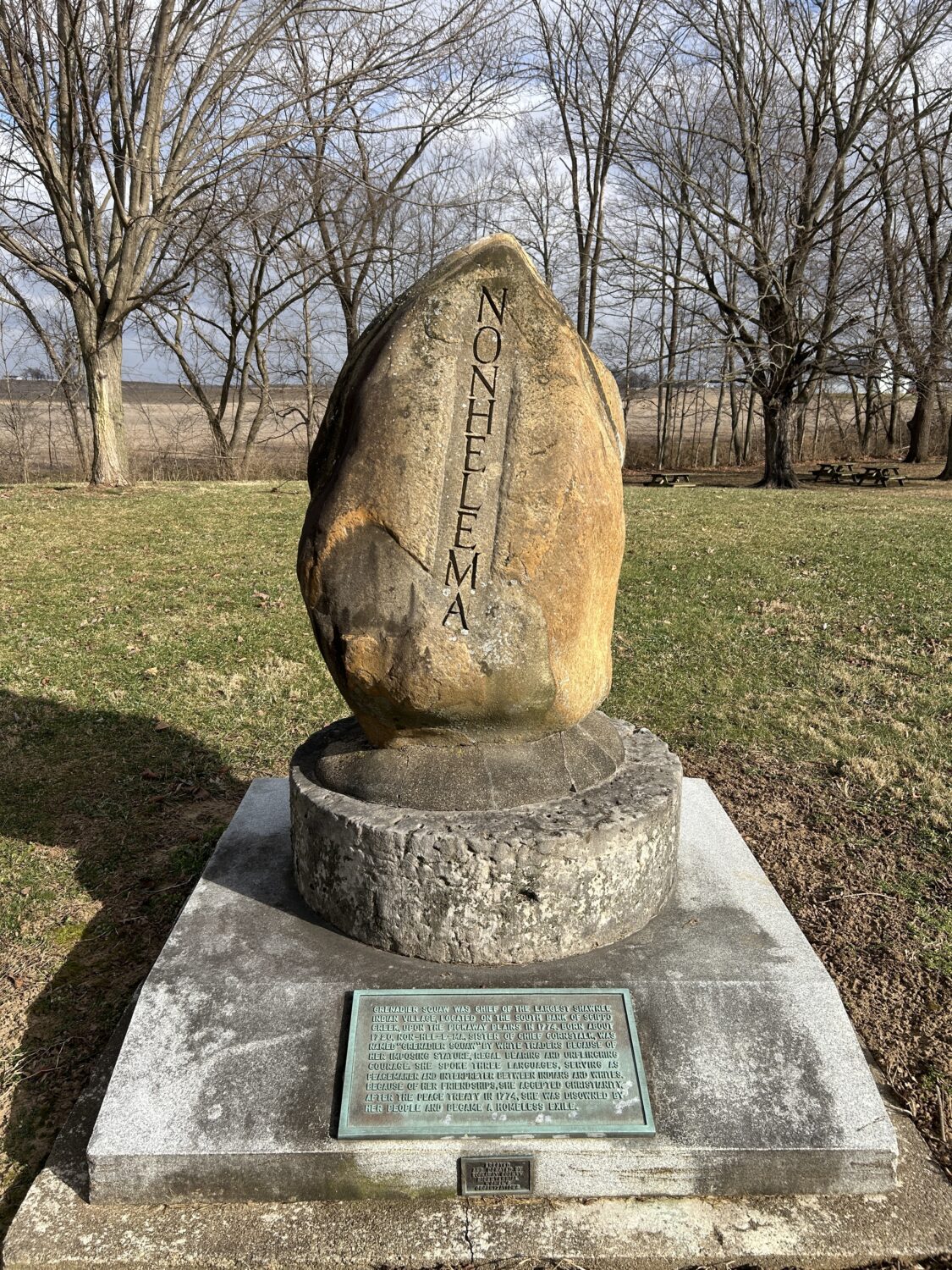
The memorial park also has plaques and markers dedicated to other native leaders and to revolutionary war leaders. Nonhelema, also called Grenadier Squaw, was the chief of the largest native village in the area. Despite her support of the United States and her refusal to side with the British during the Revolutionary War, her village was attacked and destroyed shortly after the war ended.
There is a memorial to Captain Michael Cresap in the park, which I find ironic since he was responsible for the massacre of Logan’s family. The murder of Logan’s wife and pregnant sister caused Logan to seek reprisals against settlers in the area and started Lord Dunmore’s War.
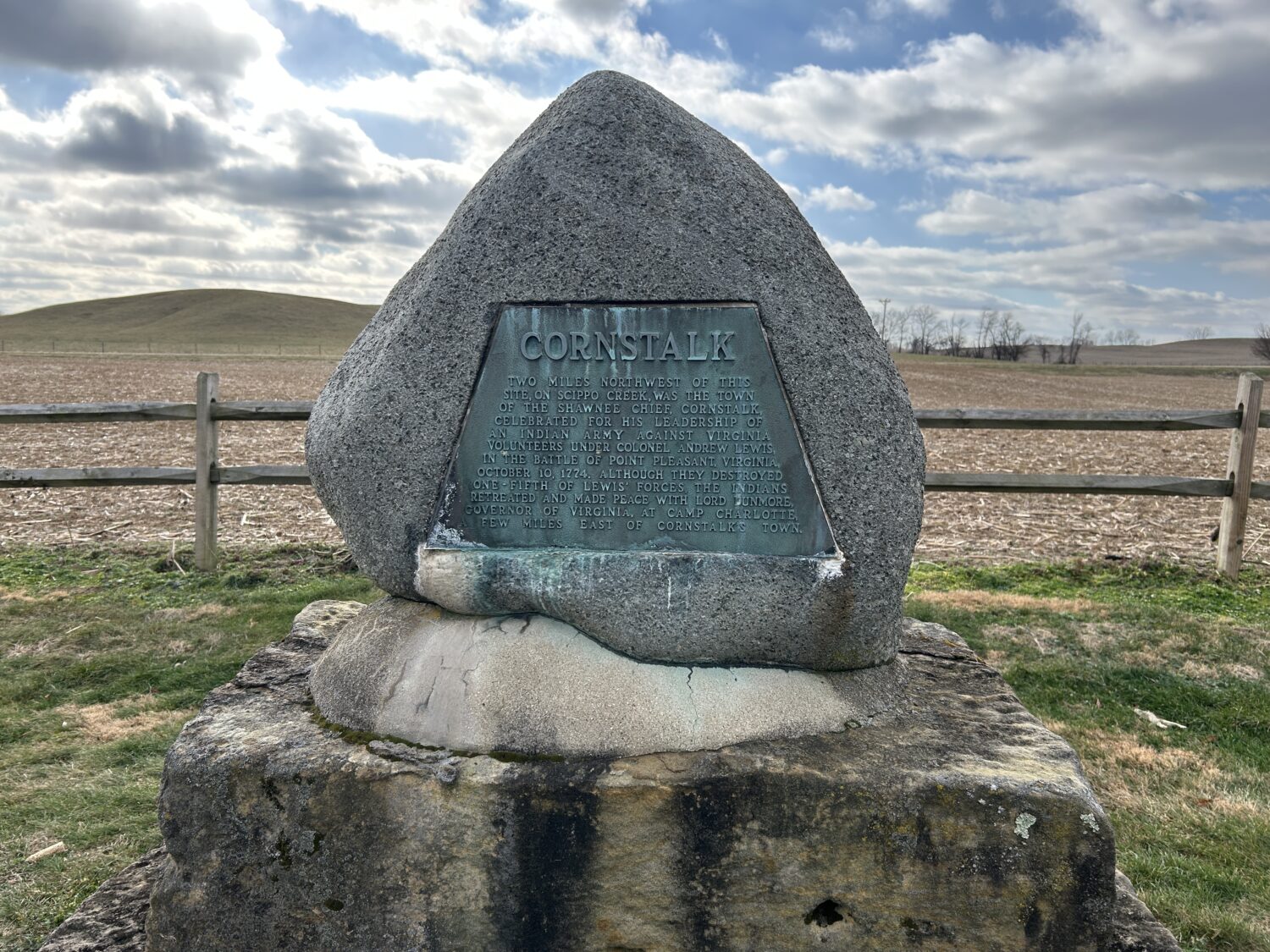
Another memorial is to Chief Cornstalk, the primary Shawnee chief during Lord Dunmore’s War. His murder, during a diplomatic visit to Fort Randolph, caused many Shawnee to join the British side in the American Revolution.

After reading all the markers in the small memorial park, Tom and I drove a little further to the site of the Treaty of Camp Charlotte. The treaty ended Lord Dunmore’s War and forced the Native Americans to cede Kentucky to the settlers. There was a small memorial and a historic marker at the site.
Having finished our tour of Historic Circleville and the area around it, Tom and I headed home. It is important to learn about the history of the place where we live. Visiting the sites that are part of the Ohio History Connection are a good way to learn. Things are easier to remember if you see them.
That is a lot for a little town!!
It is! I was amazed at the number of historical markers all over the place!