
Tom and I have been back and forth to Ohio four times this summer to spend time with my mom. In order to break up the drive and give us something interesting to see, we spent time on some of the drives looking for Brown County historical markers. I have already written about the markers in Ripley and those that are part of the Gist Settlements. Today I will write about the other Brown County markers.
Brown County is a long, skinny county that borders the Ohio River. It looks like Oklahoma rotated 90 degrees. The county was named after Major General Jacob Brown, an officer in the War of 1812. Both of the routes we take from the Ohio River to Columbus, US 68 and US 62, run through Brown County. The county is generally rural with just 43,000 residents.
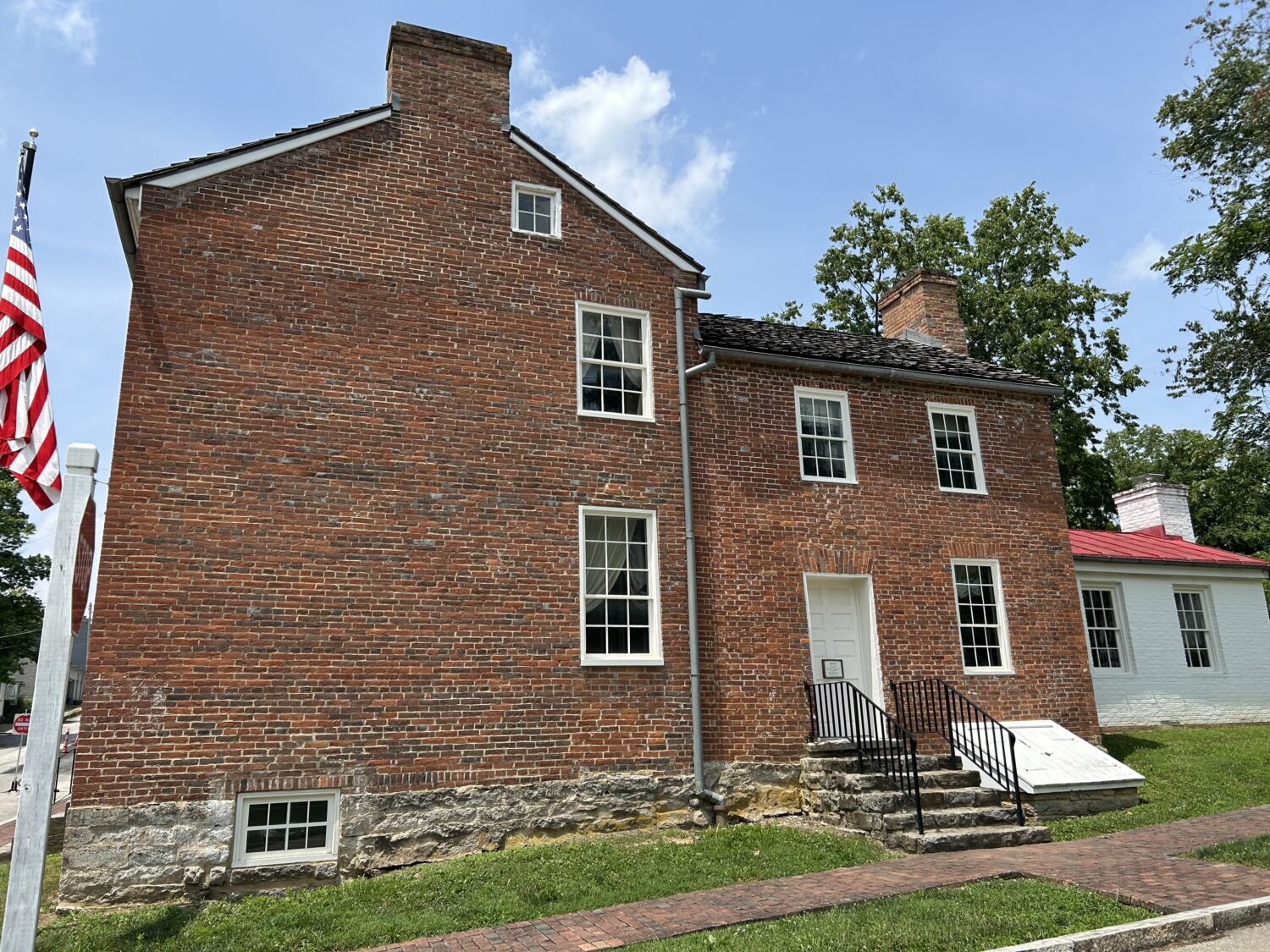
Georgetown is the county seat and the largest town, with a population of less than 5,000. Georgetown was also Ulysses S. Grant’s boyhood home. There are two historical markers in the yard at the home. The first talks about Grant’s childhood in the home. Grant’s home is also part of the Ohio History Connection and is open for tours Wednesday through Sunday afternoons. The schoolhouse he attended is also close by.
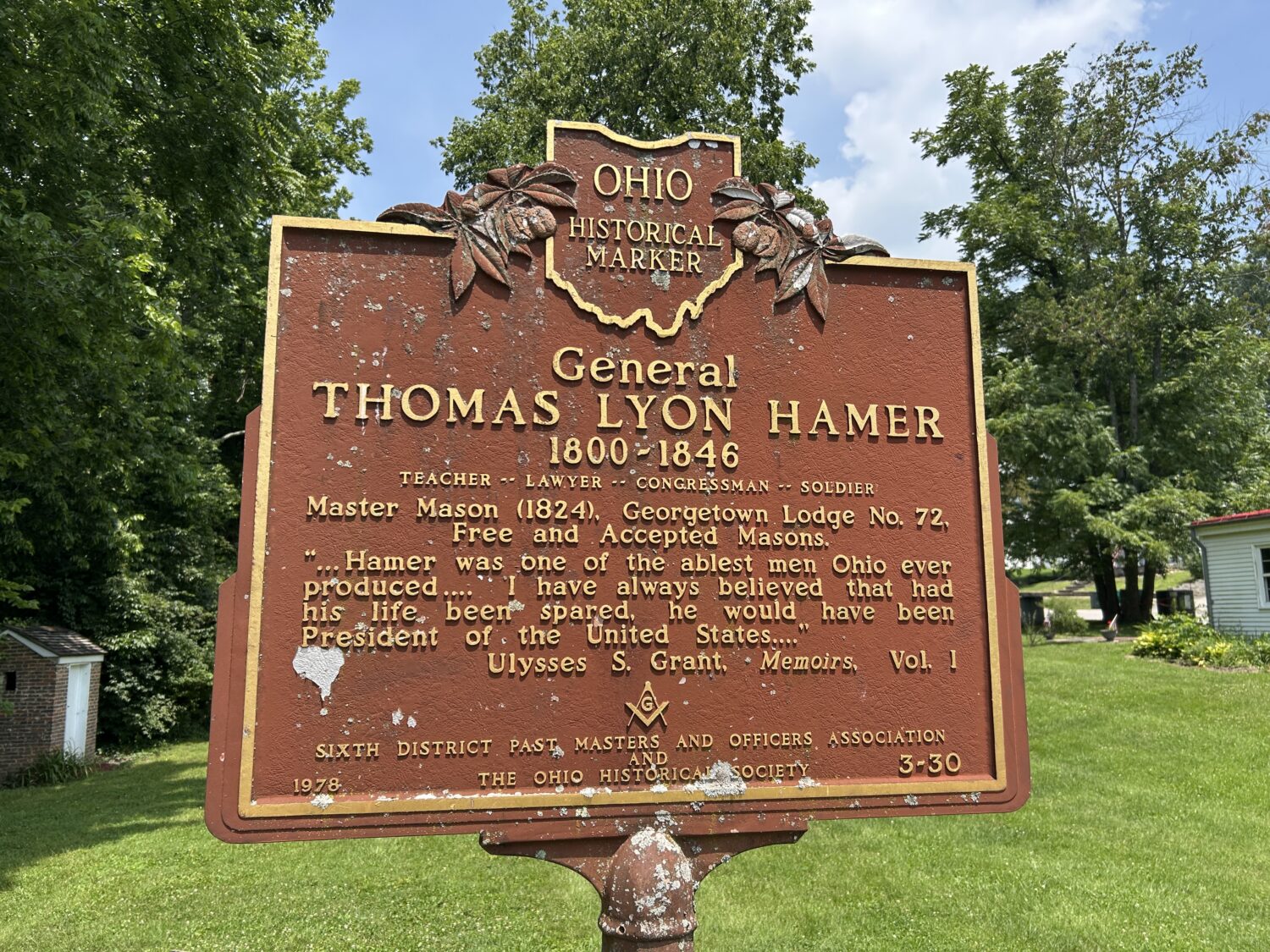
The second marker describes Thomas Lyon Hamer. Hamer was a Georgetown lawyer and US Congressman. He nominated young Hiram Ulysses Grant for West Point, but mistakenly put down his name as Ulysses S. Grant. This is the name Grant would use for the rest of his life. Hamer was a Brigadier General in the Mexican American War and died in camp during the war.

A third historical marker is located on the county fairgrounds. The marker describes the Dixon-Washburn log cabin, built in 1793. William Dixon and Cornelius Washburn were Indian scouts. Their cabin was built in nearby Logan’s Gap and later moved to the fairgrounds for historic preservation.
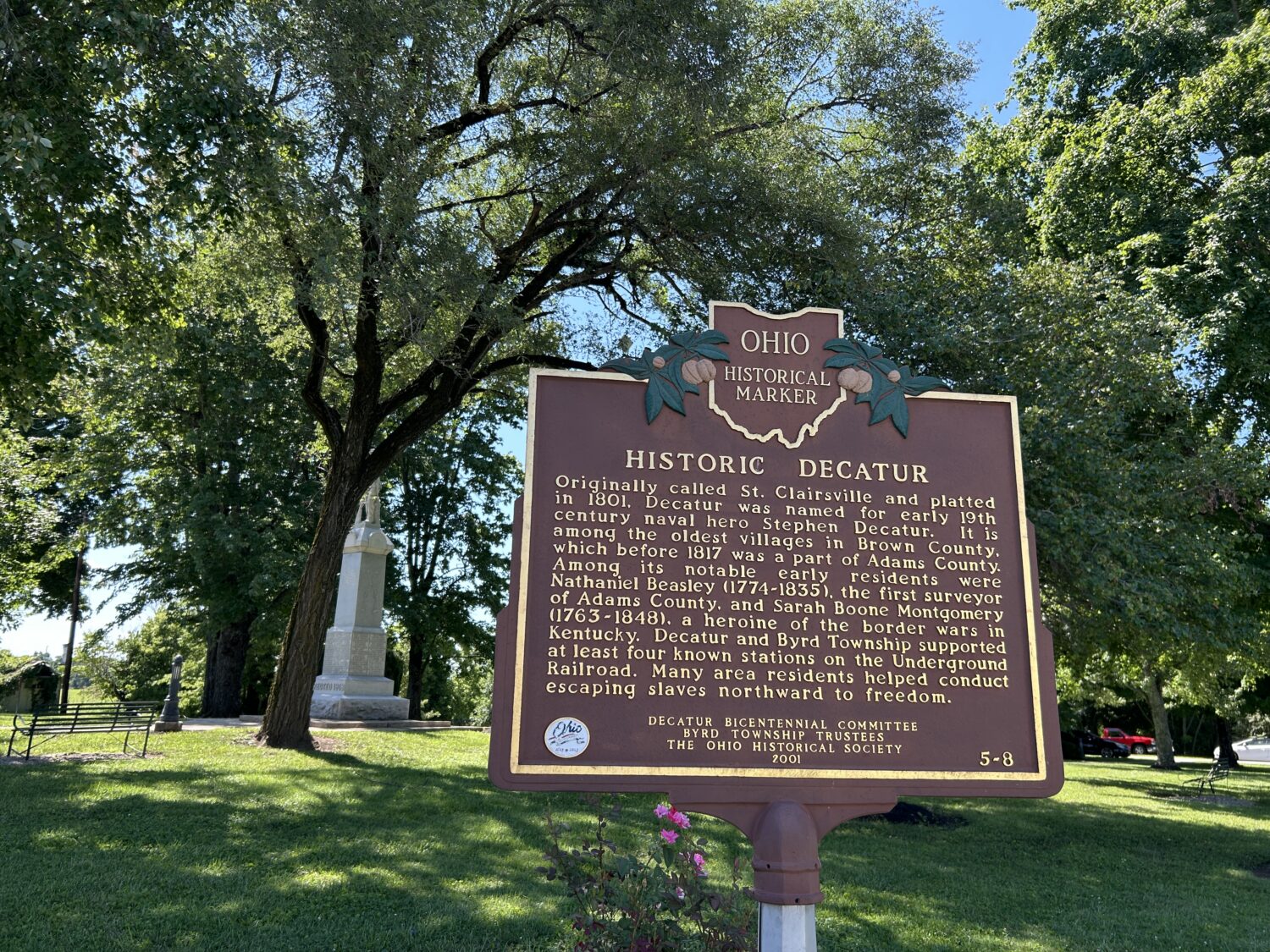
The next historical marker was located in the center Decatur, a tiny village centered around a park. The marker was at the edge of the park. The park also contained a civil war memorial and a gazebo. One side of the marker talked about the history of Decatur, platted in 1801 and named after Stephen Decatur, an officer in the US Navy.
The other side of the historical marker describes A. N. Marquis. Marquis was born in Decatur and started a publishing company in nearby Cincinnati. He later moved his company to Chicago. Marquis published the first edition of “Who’s Who in America” in 1899 and served as the book’s editor until 1940.
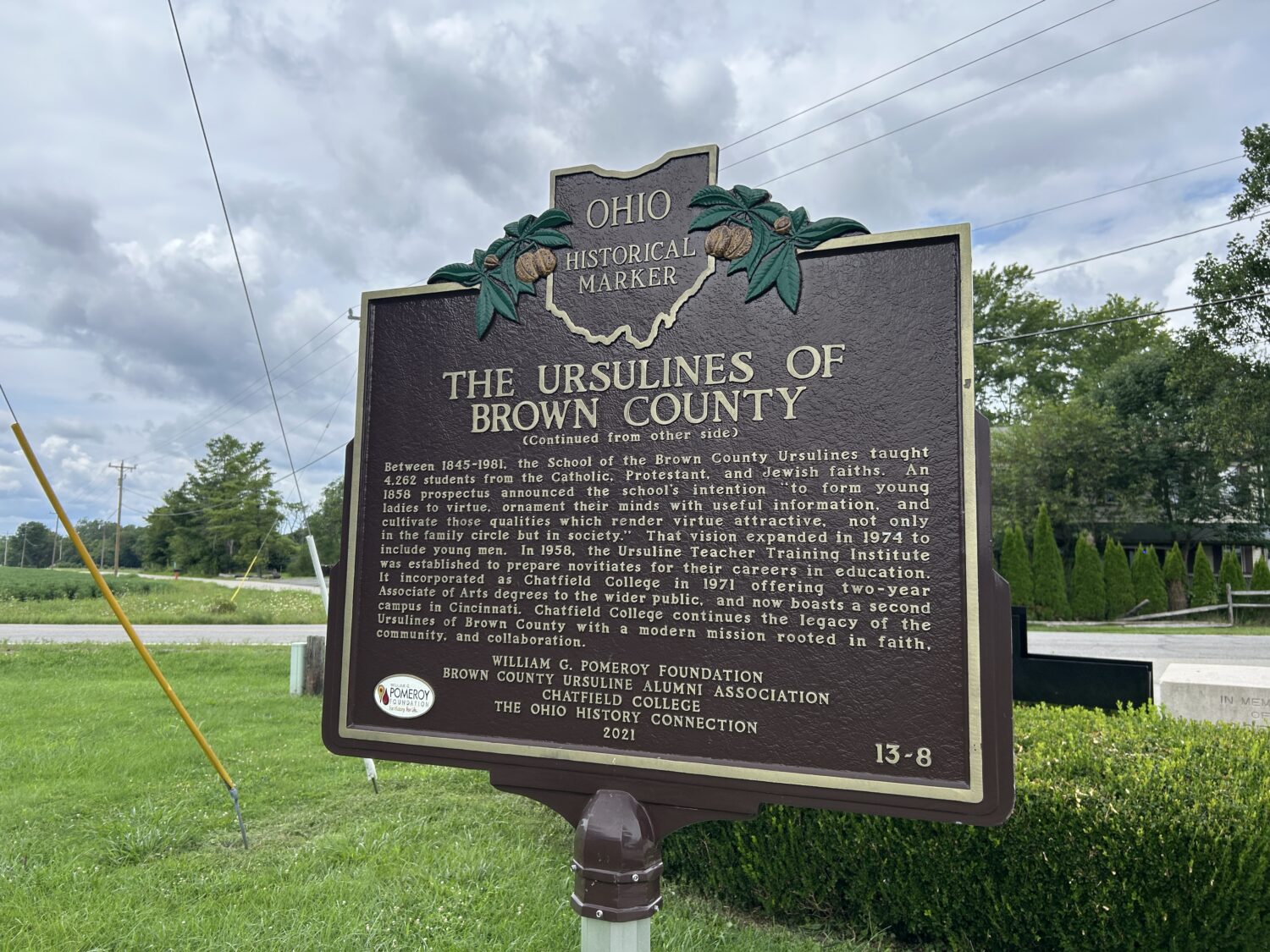
The final Brown County historical marker marks the spot of the Ursuline school in St. Martin. Eleven Ursuline sisters from France established a school for girls and young women in 1843 which was open for 136 years. The school served the local community as well as being a boarding school with an excellent reputation. Over time the school transitioned into Chatfield College, which closed in 2023. Today the grounds of the school are used as a retreat center.
With that, Tom and I found all the historical markers in Brown County. We added it to the list of Richland, Delaware, and Morrow Counties where we have found all the historical markers. Four down, 84 to go!
