
A couple of weeks ago, Tom and I visited the Gray Fossil Site and Museum in eastern Tennessee. Ranger Lucas suggested it, thinking we might find it interesting. He was right!
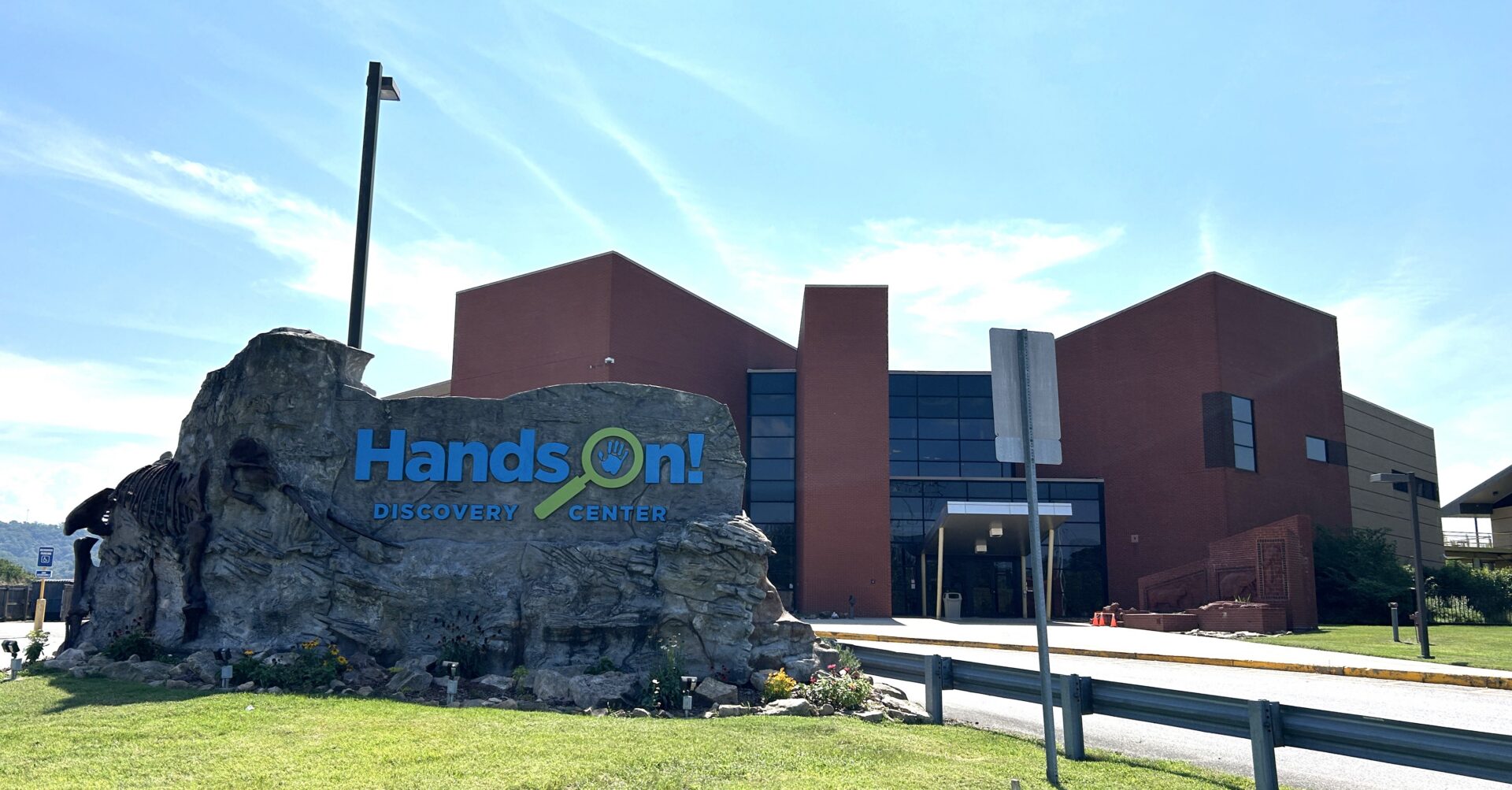
The Gray Fossil Site is an Early Pliocene assemblage of fossils dating between 4.5 and 4.9 million years old, located near the community of Gray. The site was discovered during road construction on Tennessee State Route 75 by the Tennessee Department of Transportation in May 2000. Once identified, local officials decided to preserve the site for research and education. The site became part of East Tennessee State University, and the Gray Fossil Site & Museum was opened on the site in 2007.

Five million years ago, animals gathered around a pond in a sinkhole in a warm, wet forest. The fossils found out the site represent the ancient plants and animals that lived and died around the sinkhole pond. Animals that died sank to the bottom of the sinkhole where their bones were preserved. As the first site of its age from the Appalachian region, the Gray Fossil Site is a unique window into the past. Research at the site has yielded new species of red panda, rhinoceros, pond turtle, and hickory tree. The site also hosts the world’s largest known assemblage of fossil tapirs.

Work is ongoing at the Gray Fossil Site. Students from nearby Eastern Tennessee State University, as well as their professors, dig and work with the fossils they find. Volunteers help sift the clay to find the smallest remnants of these ancient animals. Dedicated 3-D printers scan and reproduce the fossils so replicas of the bones can be displayed.
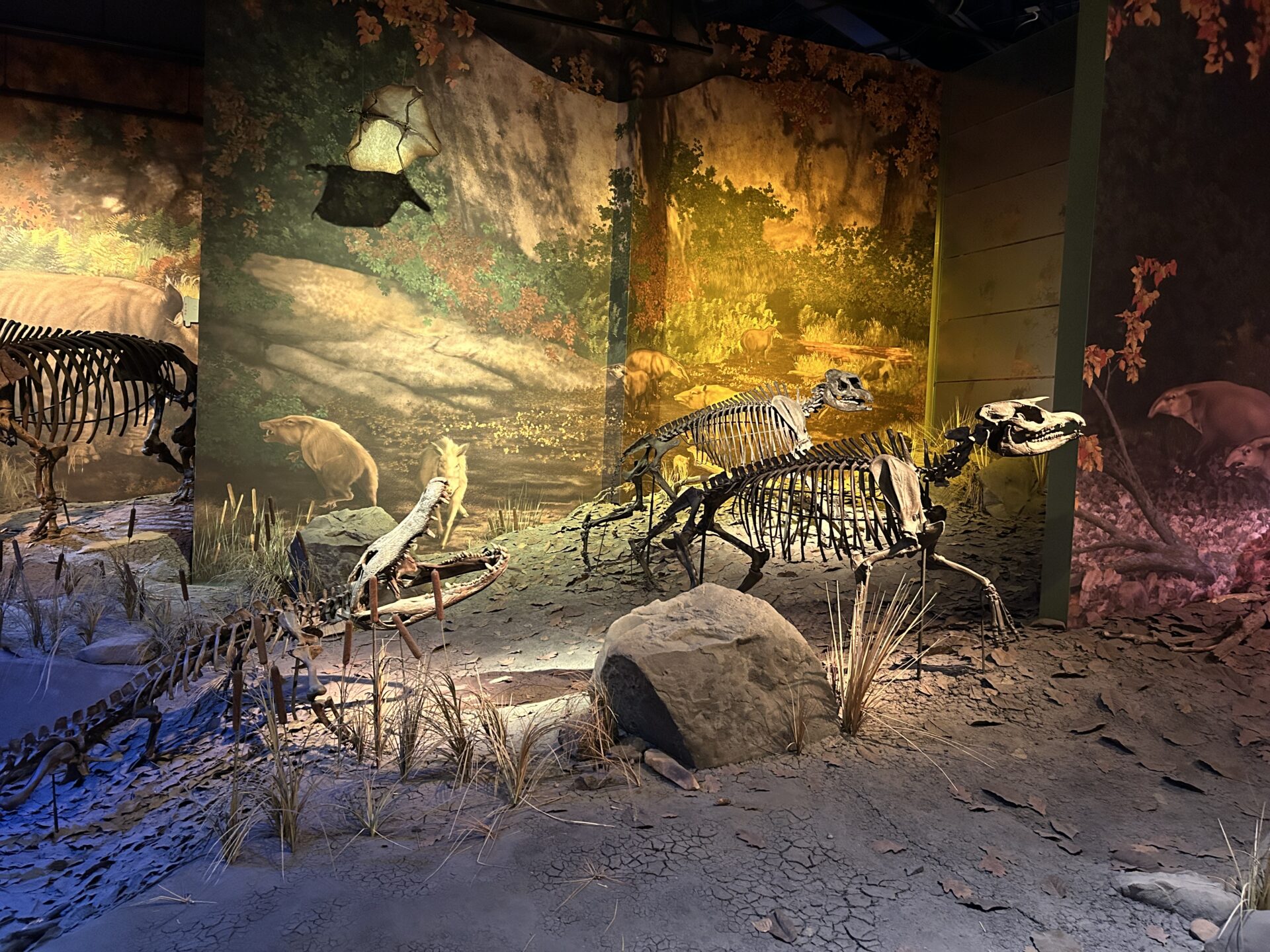
Tom and I visited the Gray Fossil Site and Museum on a weekday afternoon. The museum is run by the Hands On Discovery Museum, which partners with the fossil site and the University. It gives the museum a little bit of a schizophrenic feel. Half of it is designed for hands-on science with children and half of it is all about the fossils and paleontology. On one side of the hall was the Tesla show – all about electricity – and, on the other, replicas of skeletal remains of the ancient animals. We paid the basic admission price and then added $2 in order to take the behind-the-scenes paleontology tour.

The museum is nicely laid out. There is a paleontology hall with excellent displays and a timeline showing when the Gray Fossil site was alive. We looked at the exhibits and watched a short movie on finding the site and the ongoing research. Next door was a hands-on science hall for kids. Tom and I played around with some of the science experiments while waiting for our tour to start. We went up the stairs to join our tour and could look in windows that revealed researchers working with the fossils.

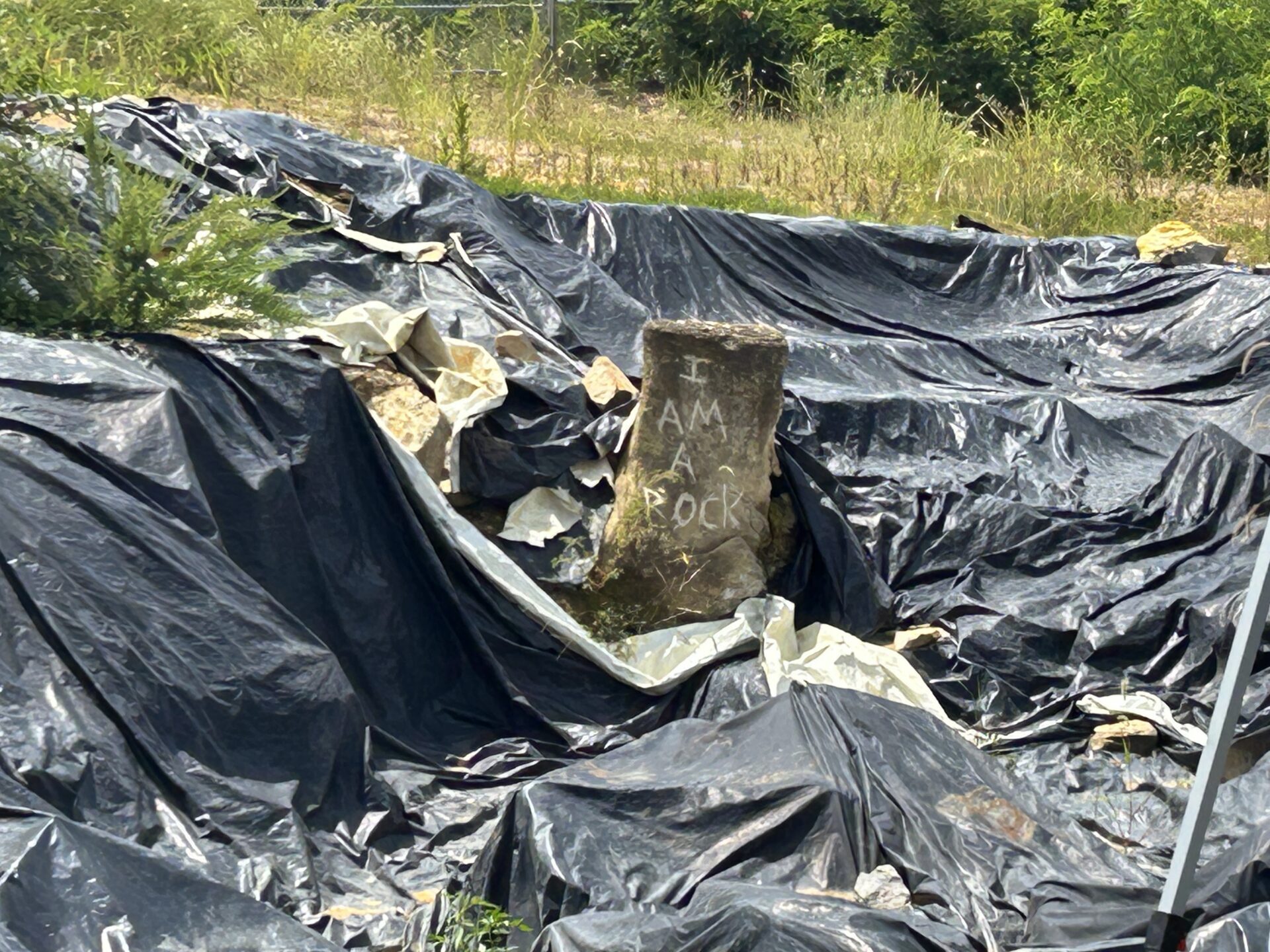
Our tour guide told us some of the history of the site. There was a white board with the bones found that month and what kind they were. Tapir bones are definitely the most common, mostly because tapirs spent the most time in the water and were most likely to sink to the bottom of the pond. Then we went outside to talk to the paleontologist who was digging that day. He told us a little about his work and what he was looking for. He also showed us the layers of clay that had built up and pointed out the black layer where the fossils are located. I was amused by one rock at the dig site. So many people had asked if it was a bone that the paleontologist had written “I am a rock!” on the rock.
After seeing several dig sites, we returned inside. Our guide moved us along the windows, explaining what was going on in each section.
The Gray Fossil Site and Museum was a fascinating place to visit. I had no idea that so many of these ancient animals lived in Appalachia. And finding so many bones in one concentrated place was amazing. I am so glad Ranger Lucas recommended that we visit. I learned a lot and never would have thought of going there otherwise. If you are visiting eastern Tennessee, add the Gray Fossil Site and Museum to your list of places to visit.