
While we were spending the day with the Winsteads, we visited the Miamisburg Mound. The mound is located very close to their home and they have visited before. Tom went to the mound when he was in elementary school. I had never been.
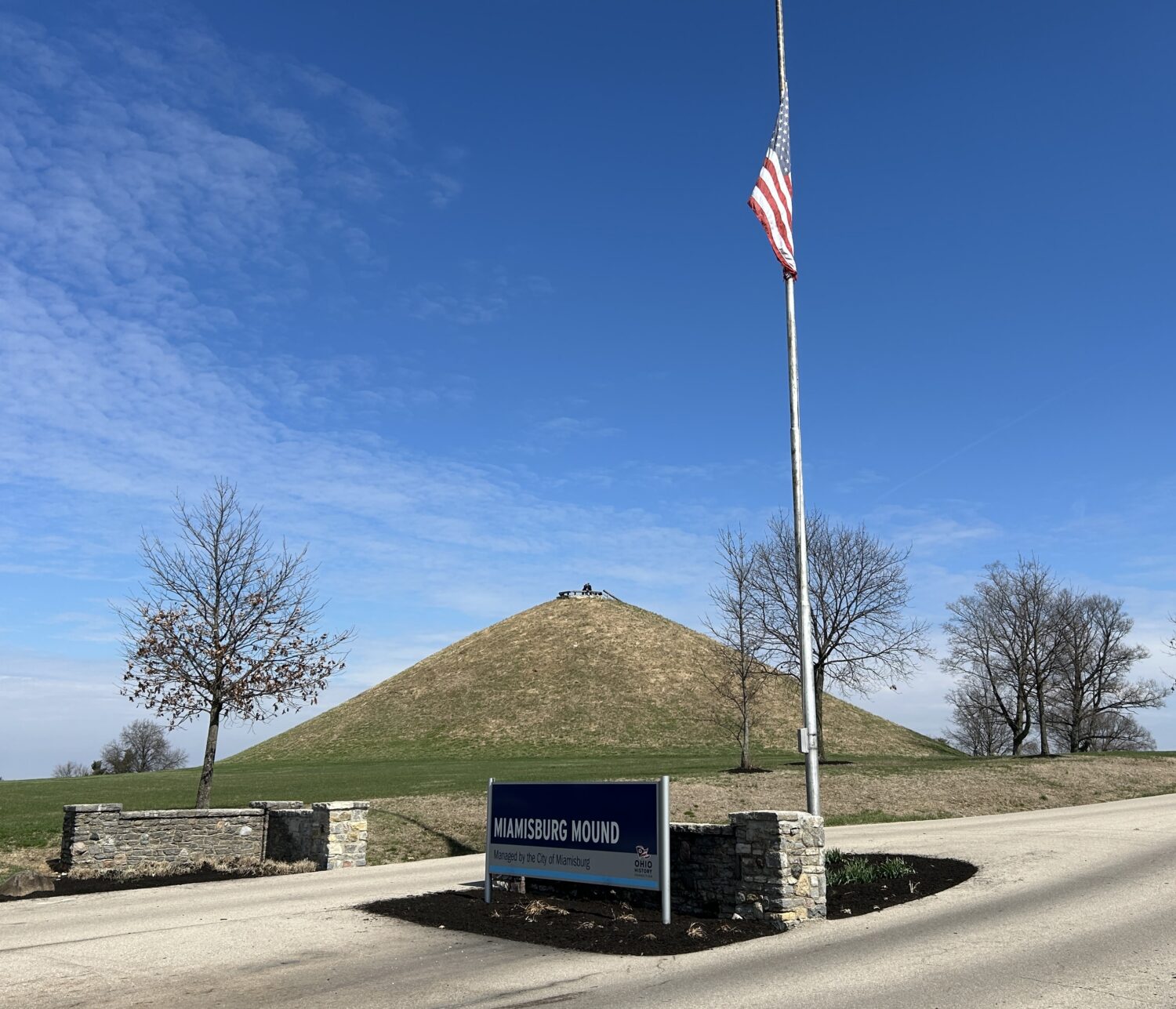
The Miamisburg Mound is one of the places in the Ohio History Connection. I wrote about it a while ago when we purchased a membership. I marked all of the places that are part of the Ohio History Connection on a Google map, and noticed the flag for it when I was looking up the Winsteads’ address. The mound has a page in the Ohio History Passport.
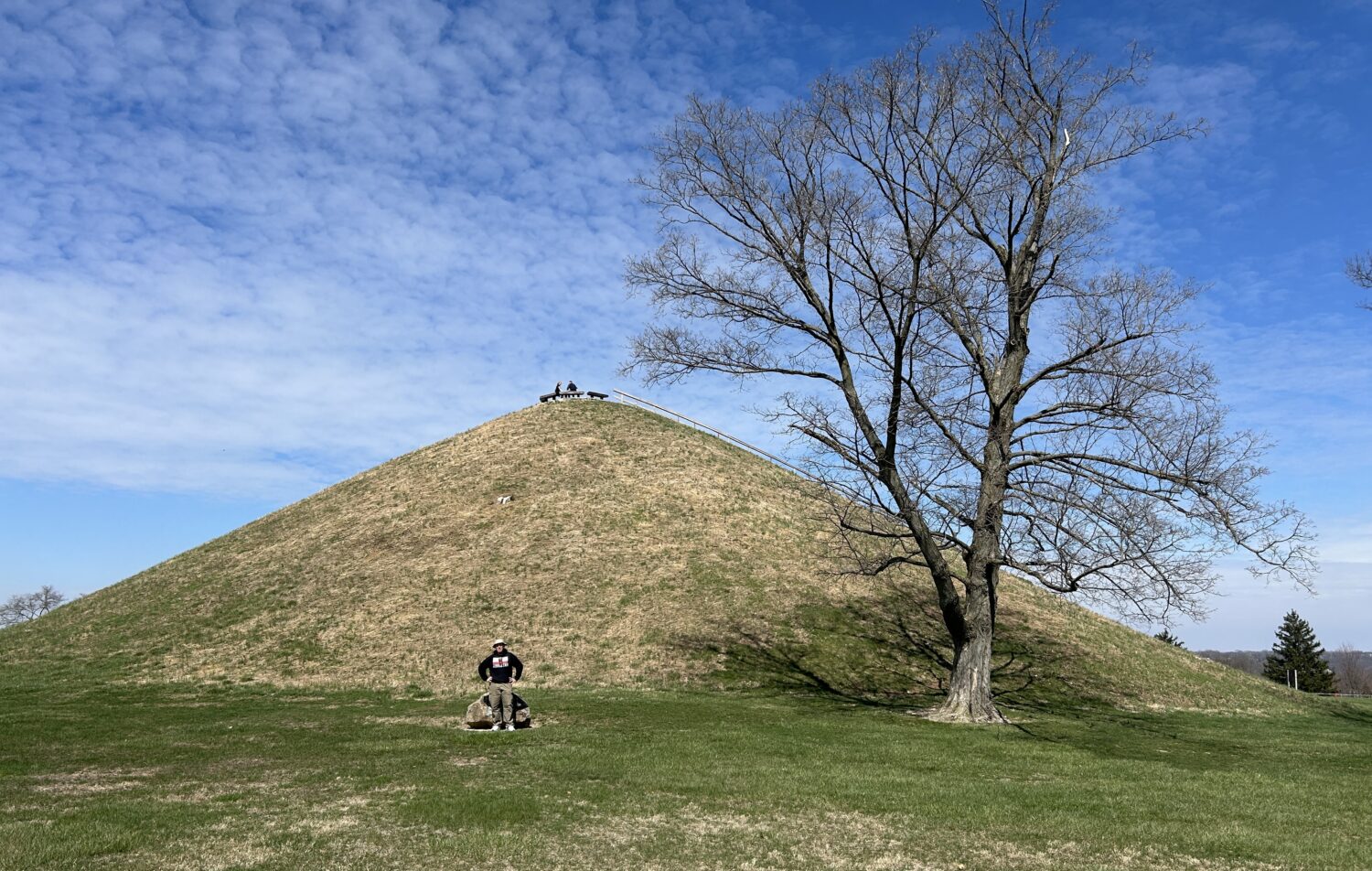
Miamisburg Mound is one of the two largest conical mounds in eastern North America. The mound is listed on the National Register of Historic Places. The mound is 65 feet tall and 800 feet in circumference and contains 54,000 cubic yards of earth. It is visible from several miles away because it stands atop a 100-foot high ridge above the Great Miami River. Steps have been built to the top observation platform, where you can enjoy a wonderful view of the area.
Excavations conducted in 1869 revealed details of construction suggesting the Adena culture (800 B.C. to A.D. 100) built the mound in several stages. The excavators found a layer of flat stones overlapping like shingles on a roof at a depth of 24 feet below the surface. At one point in its history, therefore, the mound may have had a stone facing. Monuments like Miamisburg Mound served as cemeteries for several generations of ancient Ohioans. They also may have marked the boundaries of tribal territories.
There were once an estimated 10,000 American Indian mounds and earthworks in the central Ohio Valley. Today, about 1,000 of those landmarks have survived through private landowners and local, state and federal agencies dedicated to preserving these ancient ruins.
In much of Ohio and neighboring states, the Adena culture transformed into the Hopewell culture at around A.D. 400. These cultures were the ancestors of the American Indian tribes living in the region during the early historic era.

As soon as we got to the Miamisburg Mound park, we had to head up to the top. The park is administered by the City of Miamisburg which maintains the stone steps going up to the top. I don’t think any of us minded climbing at Emma’s speed. The three-year-old stopped several times, commenting on how many steps there were. When we had about five steps to go, she told us “Almost there! You can do it!”
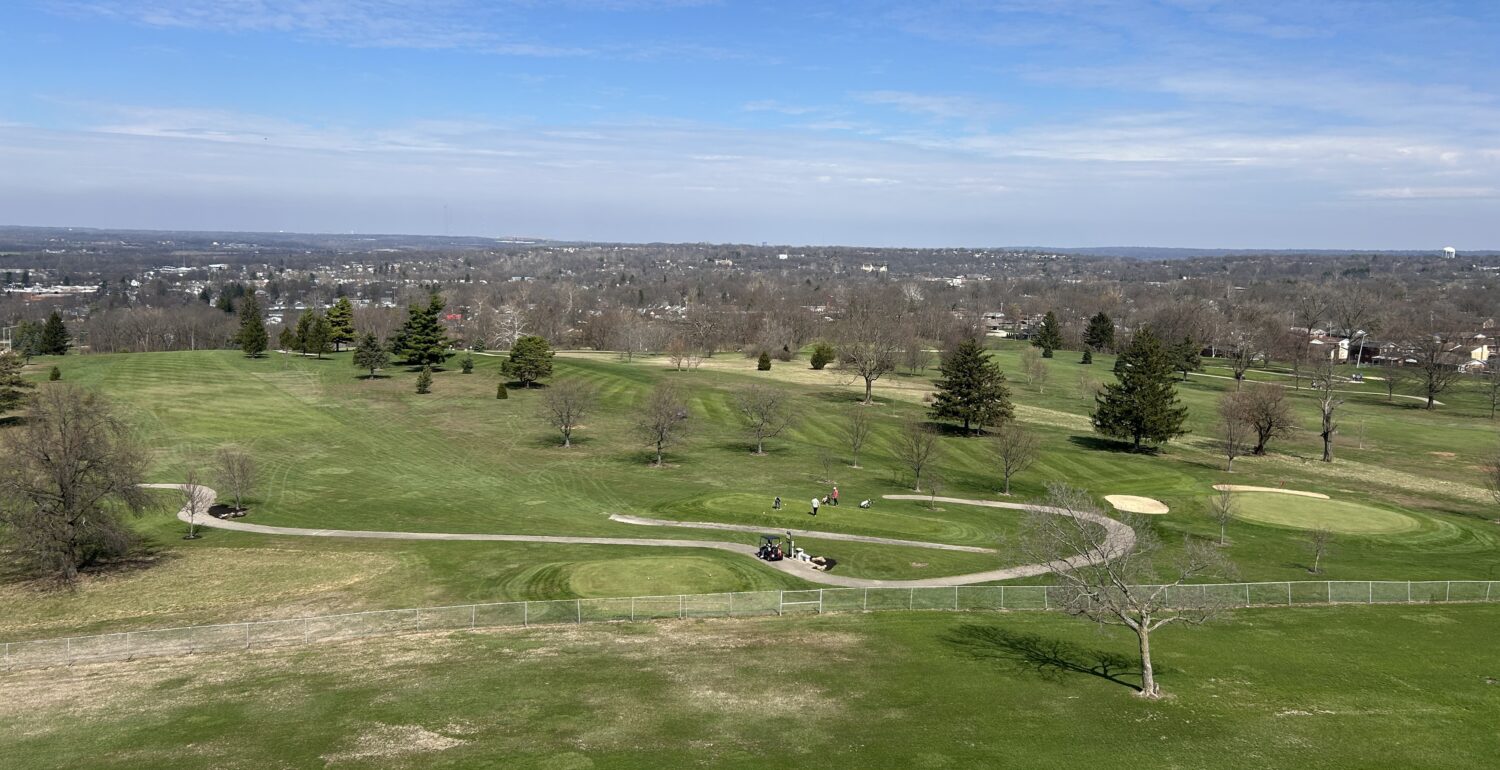
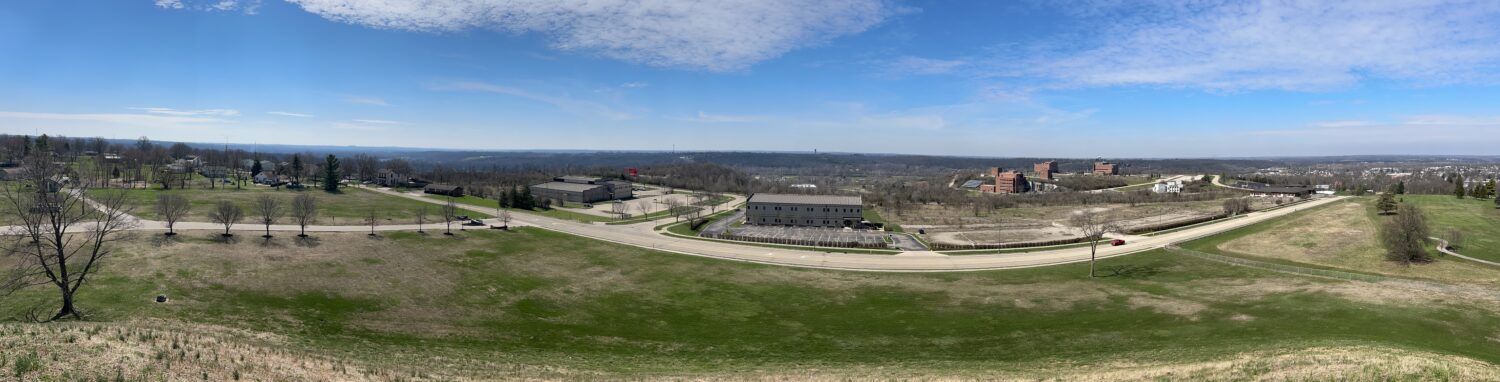
The view from the top of the mound was spectacular. It was the highest thing around for miles. Tom, especially, noticed it because when he was there 60 years ago there were trees all over the mound and through the park. The trees are long gone to expand the view. We could see downtown Dayton in the distance. A cold-war facility has been repurposed along the river. Golfers were enjoying the Mound Golf Course. When we were finished admiring the view, we climbed back down and read the informational signs. Then Emma and Tom played on one of the playgrounds.

It was a beautiful, warm spring day. A perfect day to take in the view from the top of Miamisburg Mound and think of the people who built it. I’m sure they enjoyed admiring the view as much as we did, although their view would have been considerably different.