
Tom and I recently stopped by to visit Middle Creek National Battlefield in Prestonburg, Kentucky. We were heading to Ohio via US 23 and looking for interesting things to explore.
Pikeville, Kentucky was our first stop. Pikeville is the county seat of Pike County. Despite only having 8,000 residents, it is the biggest city around in eastern Kentucky, and neighboring West Virginia and Virginia. Pikeville is known as the home of the McCoy family, part of the famous Hatfield-McCoy feud. We visited the McCoy cemetery and found the historic marker.
Tom and I were more impressed with the University of Pikeville (UPIKE). The university has more than 2,000 undergraduate and graduate students. The university buildings dominated Pikeville and made the downtown area look vibrant and healthy. A large auditorium is the perfect place to draw people in to the community for special events.
Pikeville is also home of the Pikeville Cut-Through, one of the largest civil engineering projects in the Western Hemisphere. The US Army Corps of Engineers created the cut-through with room for US 23, a railroad line, and the Levisa Fork of the Big Sandy River. Nearly 18,000,000 cubic yards of soil and rock were moved while making the Pikeville Cut-Through. The cut-through was completed in 1987.
As we drove north toward Pikeville and beyond, we kept seeing signs for the Middle Creek National Battlefield. Tom and I had never heard of this place and it isn’t listed on the Kentucky website of the National Park Service. Middle Creek National Battlefield is a National Historic Landmark, which means it is listed by the National Park Service, but doesn’t get a ranger or its own passport stamp. Instead, the battlefield is maintained by a private non-profit group who preserves and promotes the battlefield.

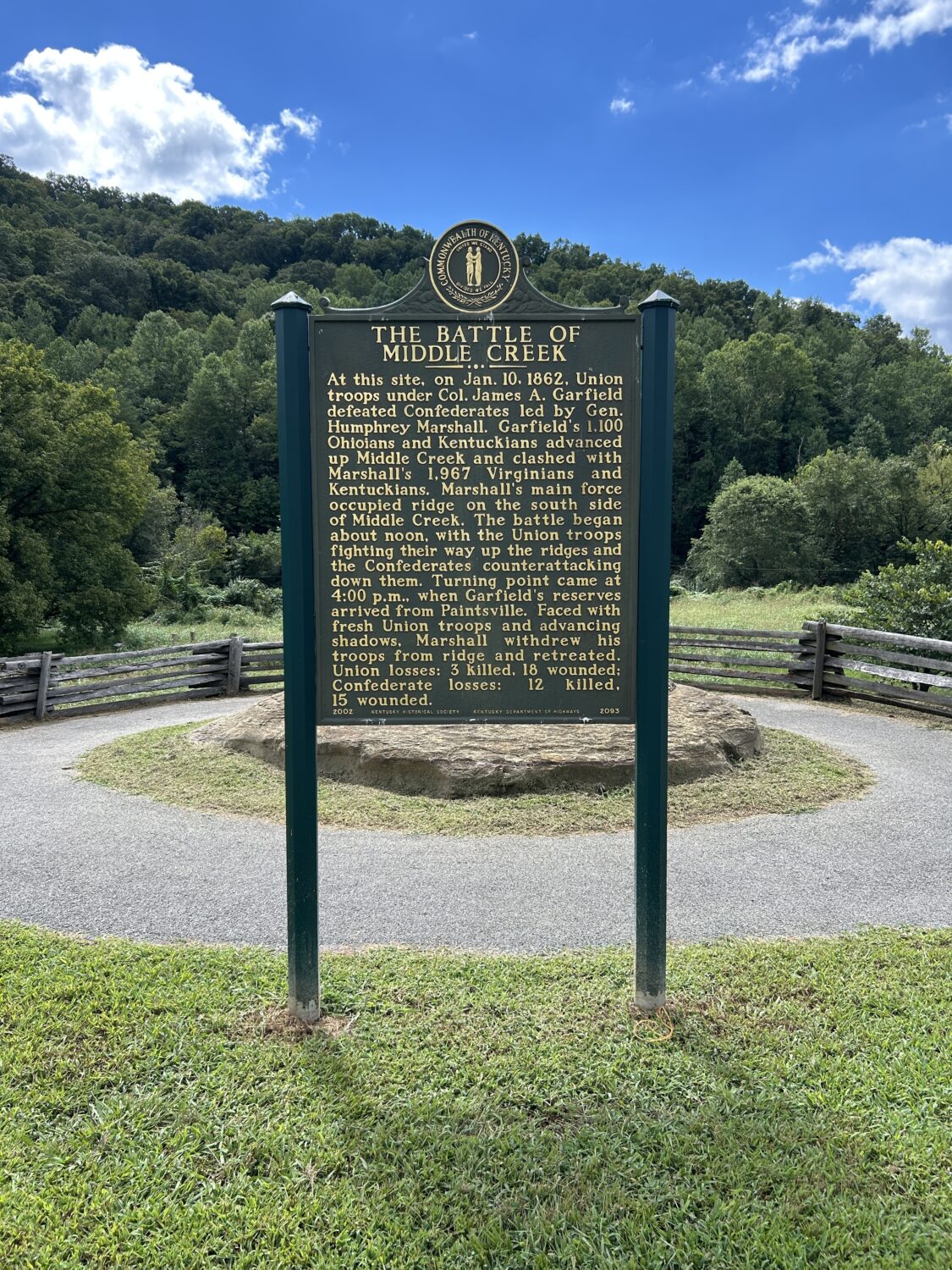
The battle at Middle Creek is interesting mainly because it was the only battle led by Colonel James A. Garfield, who would become the future president. It was decisive because it drove the Confederates out of eastern Kentucky.
Confederate Brigadier General Humphrey Marshall had been recruiting soldiers in eastern Kentucky. Union Brigadier General Don Carlos Buell directed Colonel James A. Garfield to force Marshall to retreat back into Virginia. Garfield took command of the 18th Brigade and began his march south. Swampy areas and numerous streams slowed his movements, and he arrived in the vicinity of Marshall on January 9, 1862.
Heading out at 4:00 a.m. on January 10, Garfield marched a mile west near the Forks of Middle Creek, fought off the Confederate cavalry, and turned west to attack Marshall. Marshall had put his men in line of battle north and east of the creek near its forks. The fighting continued for most of the afternoon until Union reinforcements arrived in time to dissuade the Confederates from assailing the Federal left. Instead, the Confederates retired south and were ordered back to Virginia on January 24. Garfield’s force moved to Prestonsburg after the fight and then retired to Paintsville.
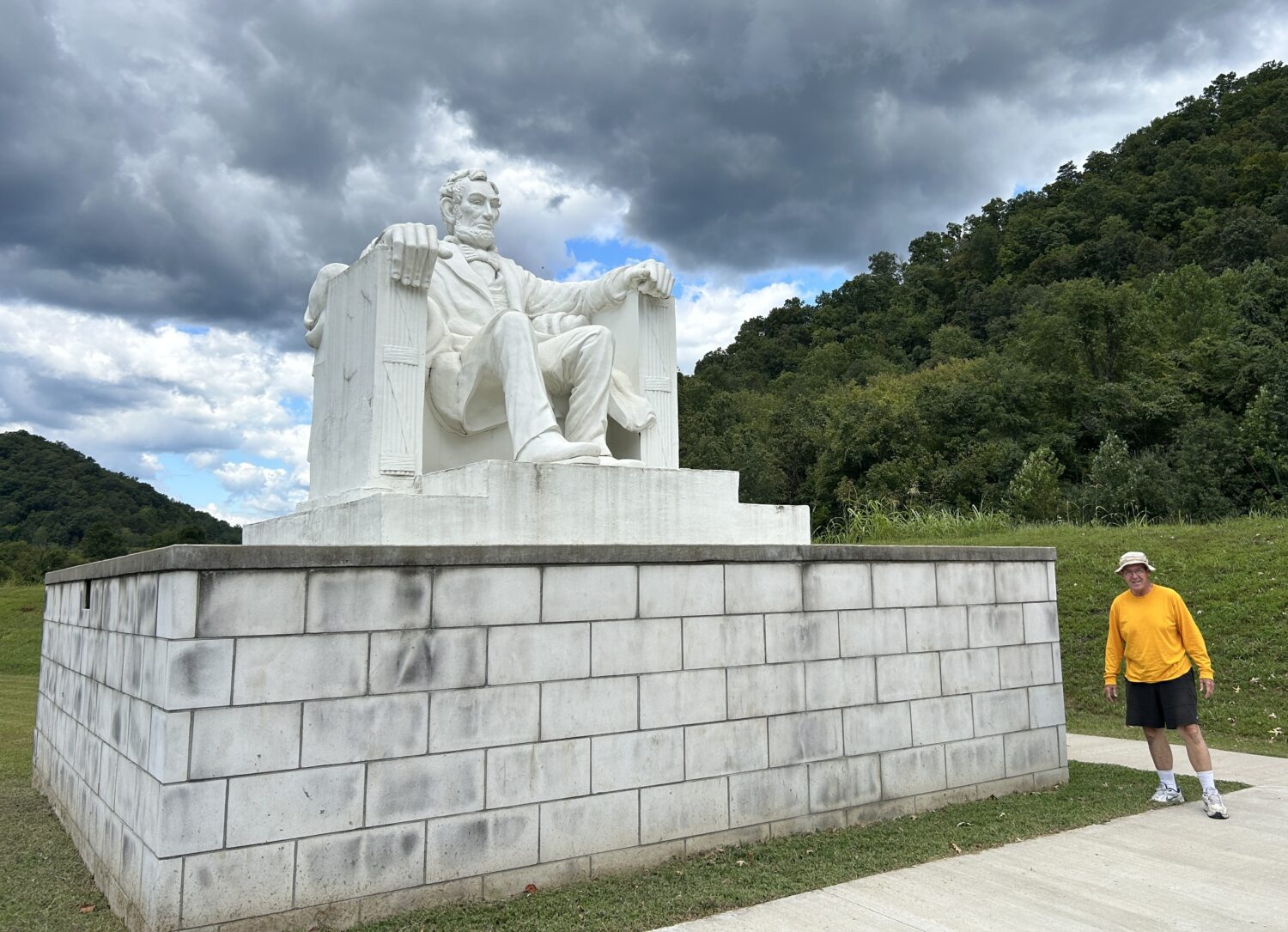
The preserved part of Middle Creek National Battlefield is small but interesting. There is a large, fancy sign welcoming people to the battlefield. A statue of Abraham Lincoln overlooks the battlefield. The statue was weirdly proportioned, with huge hands, head, and feet. Waysides at the front of the battlefield described the troop movements. There were two trails to follow – one for the union lines and one for the confederate lines. Both had waysides that were older and hard to read.
Middle Creek National Battlefield was an interesting place to stretch our legs. We also enjoyed seeing Pikeville and learning more about the history of eastern Kentucky.