
Fortified by a delicious lunch, Tom and I headed out for Mound Cemetery, the last place we wanted to visit before leaving Marietta. On our way to the cemetery, we stopped to check out some historical markers.
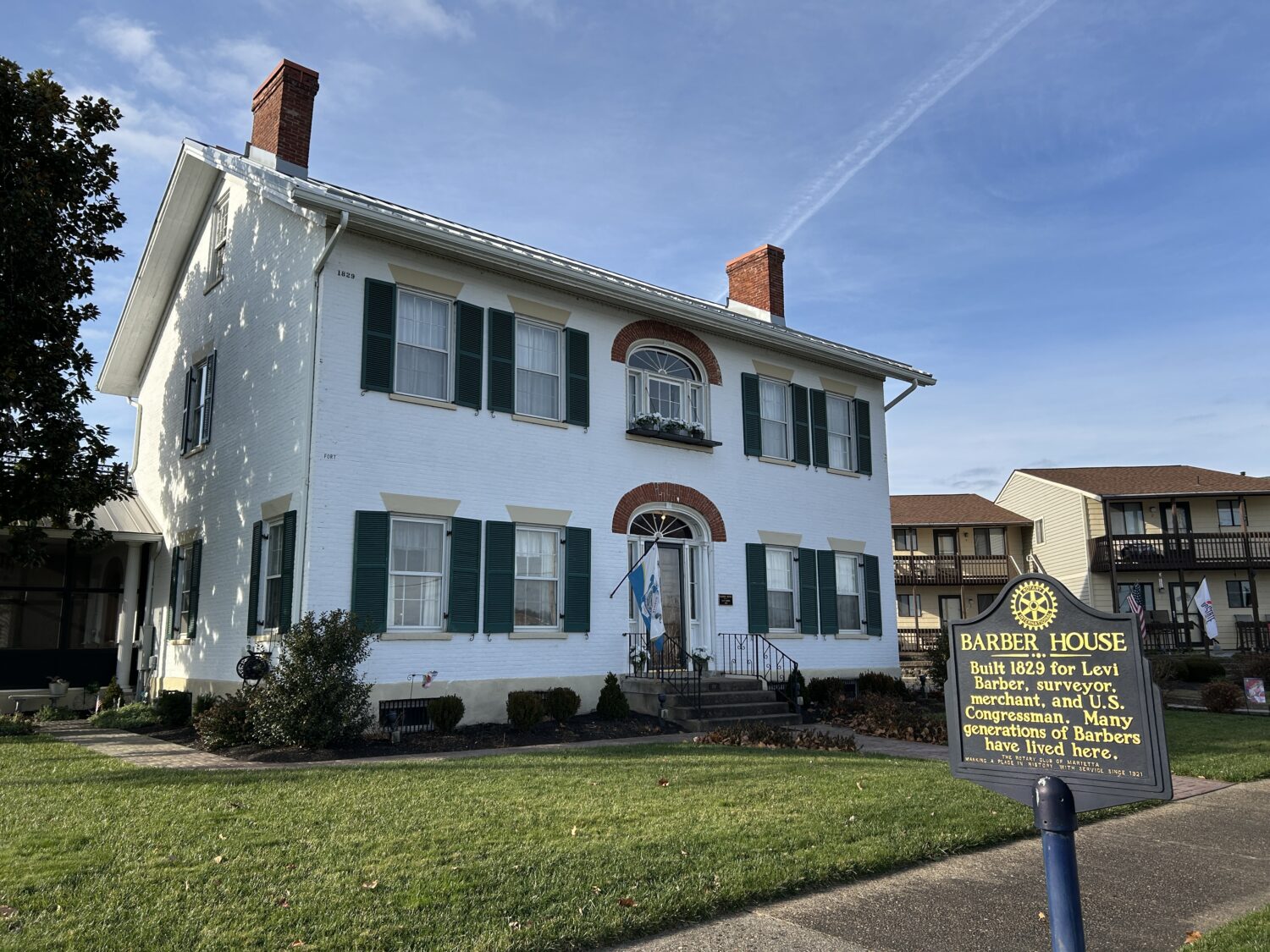
Marietta is filled with historical houses and many of them have markers in front of them. Some of them are open to tour, although none of them were available on the day we visited. The Barber House is an example of one such house.

We stopped at the location of Fort Hamar, one of the forts built for defensive purposes when Marietta was established. Fort Hamar was built at the confluence of the Muskingum and Ohio Rivers. Once the Native Americans were driven out of the area, the fort was abandoned. We also saw the Lewis and Clark marker. Meriwether Lewis wrote a letter to President Jefferson from Marietta, telling him about his arrival in September of 1803. Having read the historical markers, Tom and I continued to Mound Cemetery.
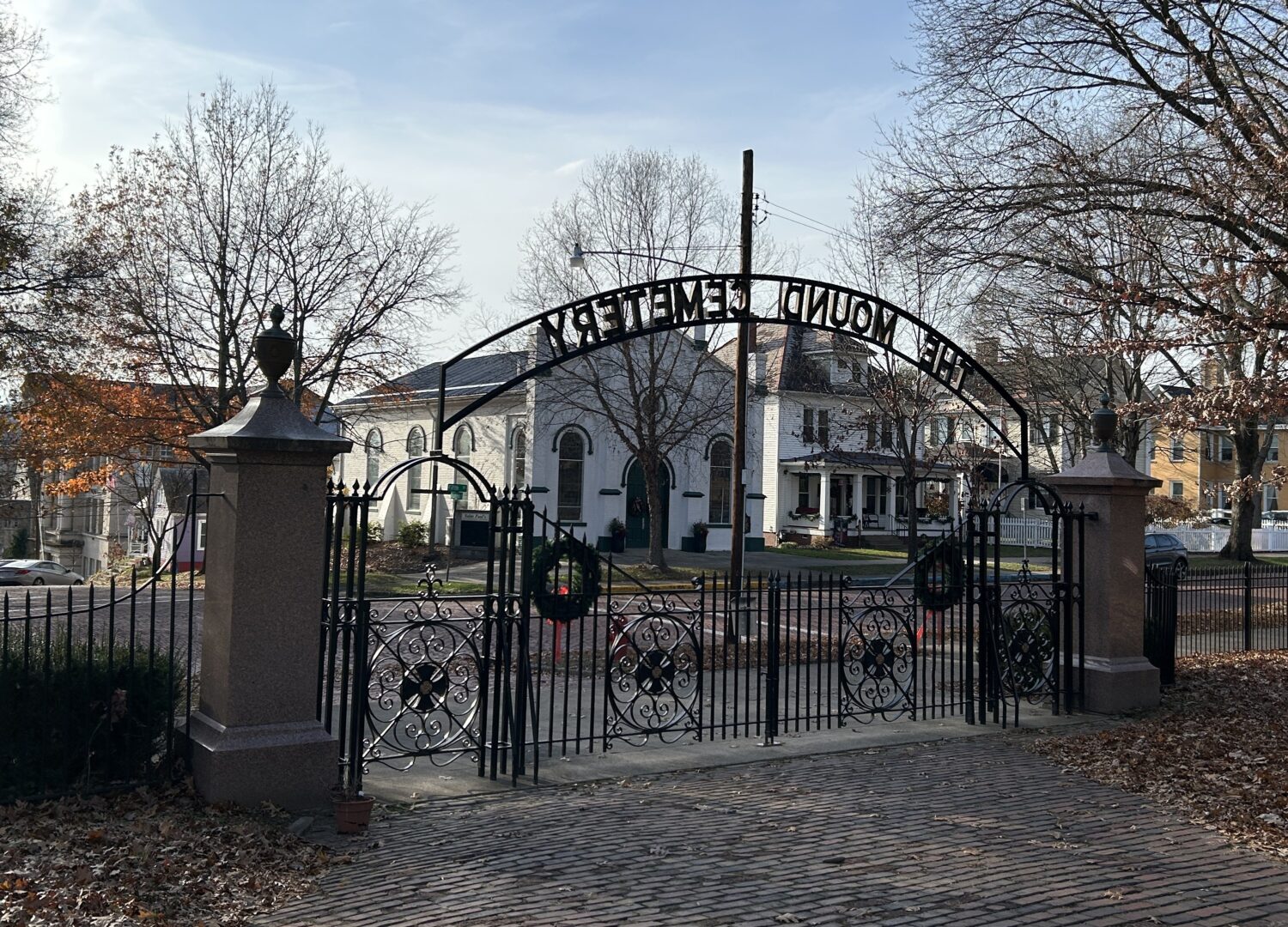
Mound Cemetery is located in the center of Marietta, adjacent to Marietta College. The most distinctive feature of the cemetery is the tall mound in the middle of it. The mound is called “The Great Mound” or “Conus” and was built by the Hopewell people before 500. The founding fathers of Marietta decided to preserve the mound by making it the centerpiece of the city cemetery. If the Great Mound is a burial mound, it means that people have been buried in this place for a very long time.

Many of the men who founded Marietta were Revolutionary War officers. Consequently, Mound Cemetery has the highest number of burials of American Revolutionary War officers in the country. I thought this was pretty impressive! The Daughters of the American Revolution have carefully documented the graves of the Revolutionary War officers. There is a special memorial with all their names.

Tom and I climbed the steps to the top of the Great Mound. This was easier than I thought it would be. Since my hip replacement surgery I haven’t climbed too many steps. The steps were very uneven and I kept my eyes on them. There was a great view of the cemetery from the top.
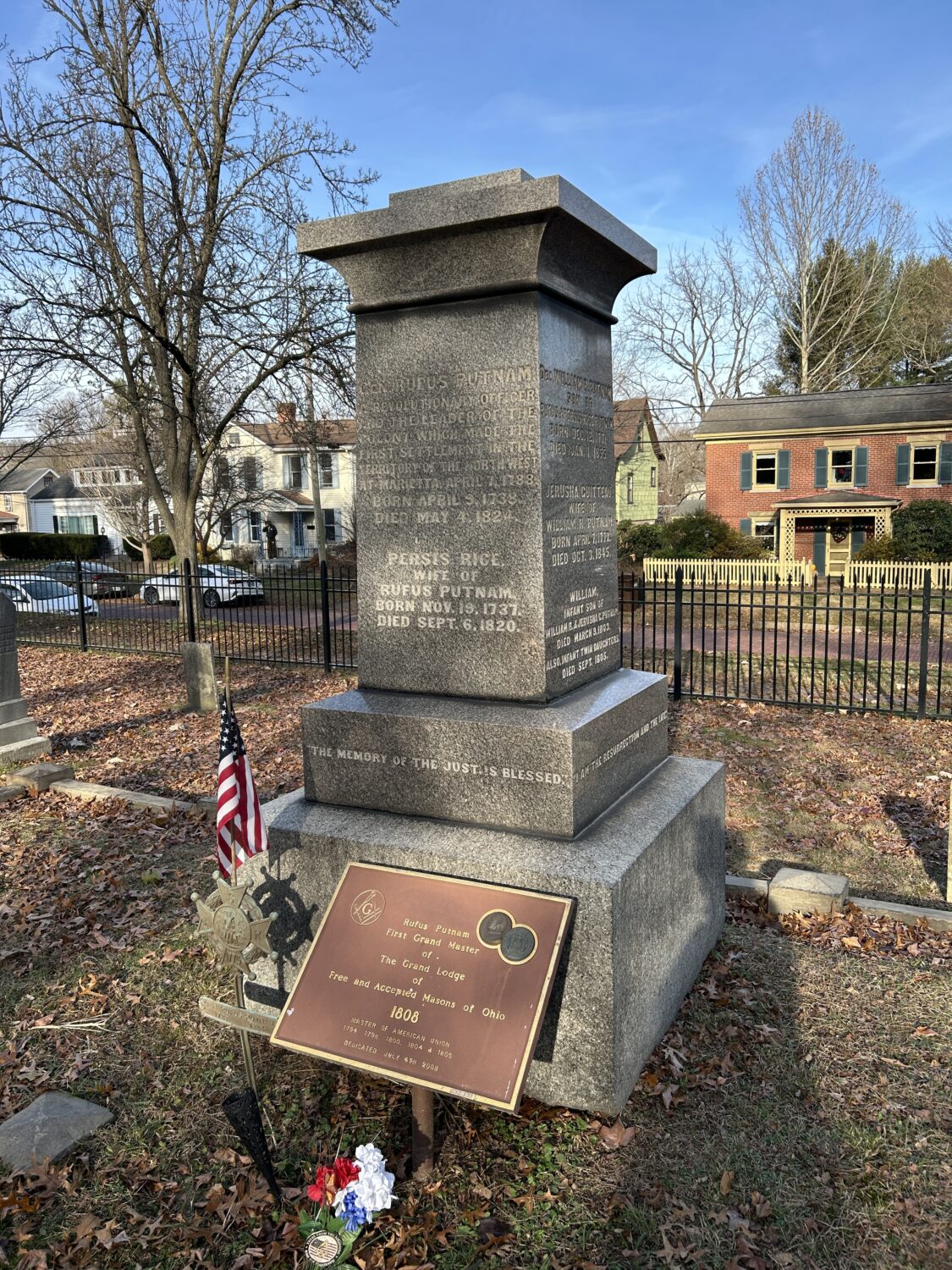
When we climbed down from the mound, we looked for Rufus Putnam‘s grave. Tom found a map of the cemetery, showing where notable people were buried. We found the Putnam grave as well as the graves of many other original settlers in the area. Wandering around the cemetery was like reading a who’s who of the founders of Ohio.

Mound Cemetery was a fitting place to end our visit to Marietta. As we drove out of town, we drove through the historic downtown, checked out some shops, and looked at Marietta College. It is amazing all the history this once small city holds.

